
Turtle species include aquatic turtles, semi-aquatic turtles, box turtles, tortoises, and sea turtles. This guide focuses mainly on freshwater aquatic and semi-aquatic turtles, then links to separate AllTurtles guides for box turtles, tortoises, and sea turtles.
Use this page to compare turtle groups by adult size, habitat, pet suitability, beginner fit, legal caution, and setup needs. Then visit the full care sheet for the species you are researching.
Quick Answer
The most common pet turtle species include red-eared sliders, painted turtles, map turtles, musk turtles, mud turtles, Reeves turtles, African sideneck turtles, and some diamondback terrapins.
The best turtle species for many beginners are usually captive-bred, legally available turtles with manageable adult size and well-understood care. Musk turtles, mud turtles, painted turtles, and some map turtles are often more manageable than large sliders, cooters, softshell turtles, and snapping turtles.
Do not choose a turtle based only on baby size. Plan for adult size, legal status, tank size, filtration, basking, UVB, heat, diet, and cleaning before getting any turtle.
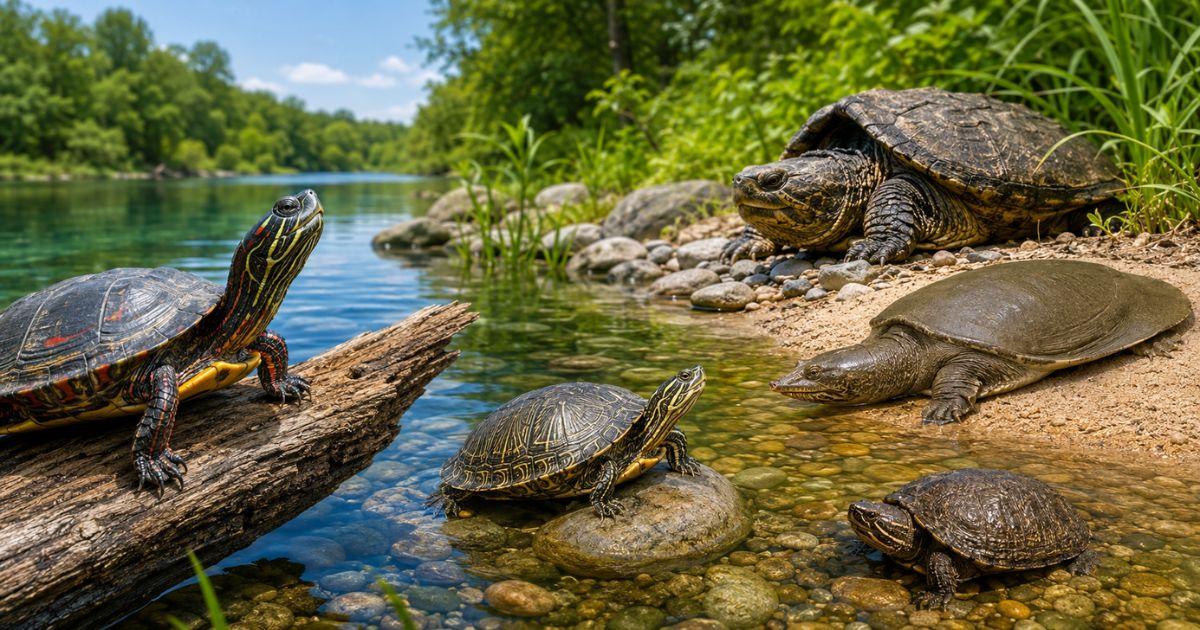
Find Turtle Species
Use the compact species finder below to search aquatic and semi-aquatic turtles by name, habitat, adult size, region, care level, and pet suitability. For the full tool, visit the Turtle Species Finder.
Find Turtle Species
Search aquatic and semi-aquatic turtle species by name, habitat, size, region, care level, and pet suitability.
Turtle Species at a Glance
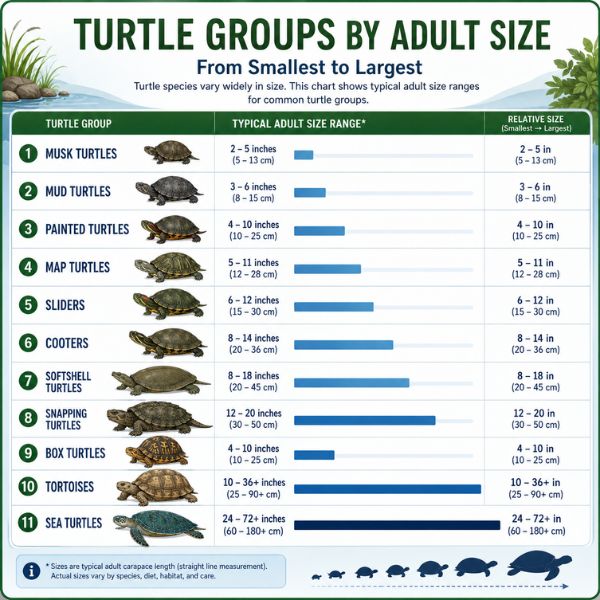
This table summarizes the main turtle species groups. Use it as a starting point, then follow the links for full care and identification guides.
| Group | Example species | Adult size range | Habitat type | Beginner fit | Pet suitability | Setup direction | Important caution |
|---|---|---|---|---|---|---|---|
| Sliders | Red-eared slider, yellow-bellied slider, Cumberland slider | About 7 to 12 inches or more | Aquatic | Moderate | Common pets | Large aquarium or pond-style setup | Females can become large and messy |
| Painted turtles | Painted turtle, southern painted turtle | About 4 to 10 inches | Aquatic | Good to moderate | Good for prepared keepers | Aquarium with basking and strong filtration | Active swimmers need real space |
| Map turtles | Map turtles, Mississippi map turtle, northern map turtle | About 4 to 12 inches by sex and species | Aquatic | Moderate | Good display turtles | Clean water and basking setup | Females can be much larger than males |
| Musk turtles | Common musk turtle, razorback musk turtle | About 3 to 6 inches | Aquatic | Good to moderate | Good small turtle option | Shallow resting areas with clean water | Can bite and may not enjoy handling |
| Mud turtles | Eastern mud turtle, striped mud turtle, yellow mud turtle | About 3 to 5 inches | Semi-aquatic | Good to moderate | Good small turtle option | Shallow water, land access, and filtration | Needs easy access to air and resting places |
| Cooters | Cooter turtles, eastern river cooter, peninsula cooter | About 8 to 15 inches | Aquatic | Low for small homes | Only for large setups | Large aquarium, stock tank, or pond | Often outgrow casual tanks |
| Softshell turtles | Softshell turtles, Florida softshell, spiny softshell | About 7 to 24 inches by species and sex | Aquatic | Low for beginners | Specialist species | Large clean tank with sand and injury prevention | Sensitive skin and large adult size |
| Snapping turtles | Common snapping turtle, alligator snapping turtle | Large to very large | Aquatic | No for most beginners | Specialist only | Large stock tank or pond-style enclosure | Large size, bite risk, and legal issues |
| Terrapins and wood turtles | Diamondback terrapin, wood turtle, Blanding’s turtle | Varies by species | Aquatic or semi-aquatic | Moderate to advanced | Depends on species and law | Species-specific setup | Some have legal or conservation restrictions |
| Side-necked turtles | African sideneck turtle, African helmeted turtle | About 6 to 12 inches | Aquatic | Moderate | Captive-bred pets where legal | Warm aquatic setup | Needs species-specific temperature planning |
| Box turtles | Box turtle species | Usually about 4 to 8 inches | Land-based or semi-terrestrial | Moderate | Separate care path | Humid terrestrial enclosure | Not an aquarium turtle |
| Tortoises | Tortoise species | Small to giant | Terrestrial | Varies widely | Separate care path | Tortoise table or outdoor enclosure | Not a water turtle |
| Sea turtles | Sea turtle species | Large marine reptiles | Ocean | Not pets | Education only | Wild marine habitat | Protected wildlife |
What Counts as a Turtle?
All turtles belong to the order Testudines. In everyday language, people often use “turtle” for aquatic species, “box turtle” for land-based hinged-shell turtles, “tortoise” for land-dwelling Testudinidae species, and “sea turtle” for marine species.
Care needs vary dramatically. A musk turtle may need a smaller aquatic setup with easy resting areas. A red-eared slider may need a large aquarium. A box turtle needs a land-based enclosure. A tortoise needs floor space and species-specific plant-based care. A sea turtle belongs in the ocean and is not a pet.
Turtle Species vs Turtle Types and Turtle Breeds
People often search for turtle types or turtle breeds, but turtles are usually grouped by species, subspecies, families, and broader care groups. A red-eared slider and a common musk turtle are not breeds. They are different species with different adult sizes, tank needs, diets, and behavior.
Using the correct species name helps you plan the right setup and avoid major care mistakes.
Main Types of Turtle Species
The most useful way for pet keepers to compare turtle species is by habitat and adult care needs.
- Aquatic turtles spend most of their time in water and need an aquarium, stock tank, or pond with a dry basking area.
- Semi-aquatic turtles use both water and land or need shallow water with easy resting access.
- Box turtles are land-based turtles that need terrestrial space, humidity, hides, and a shallow water dish.
- Tortoises are land-dwelling turtles that need floor space, UVB, heat, substrate, and a species-appropriate plant diet.
- Sea turtles are protected marine wildlife and are included for education and identification only.
Best Turtle Species for Beginners

The best beginner turtle is not always the most common turtle. A good beginner species should be legally available, captive-bred, manageable as an adult, and well documented in care guides.
| Rank | Species or group | Why it works | Adult size | Care difficulty | Best setup | Who should skip it |
|---|---|---|---|---|---|---|
| 1 | Common musk turtle | Small adult size and manageable water needs | About 3 to 5 inches | Moderate | 40 gallon or larger aquatic setup with resting areas | Keepers who want frequent handling |
| 2 | Mud turtles | Small size and interesting behavior | About 3 to 5 inches | Moderate | Shallow water with land access and filtration | Keepers who want deep-water display turtles |
| 3 | Painted turtle | Active, colorful, and well known in care | About 4 to 10 inches | Moderate | Aquarium with basking, UVB, heat, and strong filter | Keepers with only a small tank |
| 4 | Male map turtle | Some males stay smaller and make good display turtles | Often about 4 to 6 inches for males | Moderate | Clean aquarium with strong basking and filtration | Keepers who cannot confirm sex or species |
| 5 | Reeves turtle | Popular smaller semi-aquatic turtle where captive-bred and legal | About 6 to 9 inches | Moderate | Warm semi-aquatic setup | Keepers who cannot provide stable temperatures |
Small Turtle Species
Small turtle species can be easier to house than large turtles, but they are not low-maintenance. The best small aquatic turtles for many keepers are musk turtles and mud turtles.
Good small turtle pages to read next include Small Turtles That Stay Small, Common Musk Turtle, Razorback Musk Turtle, Eastern Mud Turtle, and Striped Mud Turtle.
Large Turtle Species
Large turtles often need stock tanks, ponds, large aquariums, heavy-duty filtration, and careful handling. They are not ideal for most first-time keepers.
Examples include common snapping turtles, alligator snapping turtles, cooter turtles, large female sliders, and many softshell turtles.
Freshwater Turtle Species
Most pet turtle species are freshwater turtles. They may live in ponds, lakes, slow rivers, wetlands, swamps, marshes, or muddy shallows depending on the species.
Freshwater turtles commonly need clean water, a dry basking area, UVB lighting, heat, a strong filter, water temperature control, and regular cleaning.
Aquatic and Semi-Aquatic Turtle Species
Aquatic turtles spend most of their time in water. Semi-aquatic turtles use both water and land, or need shallow water with easy resting access. The setup must match the species rather than a generic “turtle tank.”
For setup help, use the Turtle Tank Size Calculator, Turtle Tank Setup Guide, Best Turtle Tanks, Best Filter for Turtle Tank, and Best Turtle Dock.
Sliders

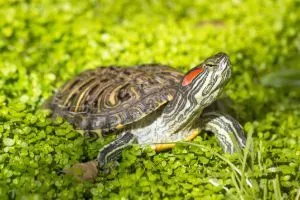
Sliders are among the most common pet turtles. The best-known species is the red-eared slider. Other slider guides include the yellow-bellied slider, Cumberland slider, and pond sliders.
Sliders are active swimmers and frequent baskers. They are popular, but many adults need large tanks. A red-eared slider is not a tiny turtle just because it is small as a hatchling. Read the Red-Eared Slider Tank Size and Setup Guide before getting one.
Painted Turtles

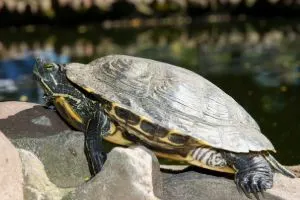
Painted turtles are colorful North American freshwater turtles. Common guides include the eastern painted turtle, midland painted turtle, southern painted turtle, and western painted turtle.
Painted turtles need swimming space, basking, UVB, heat, clean water, and a varied diet. Southern painted turtles and males may be more manageable than large females, but all painted turtles need a real aquatic setup.
Map Turtles

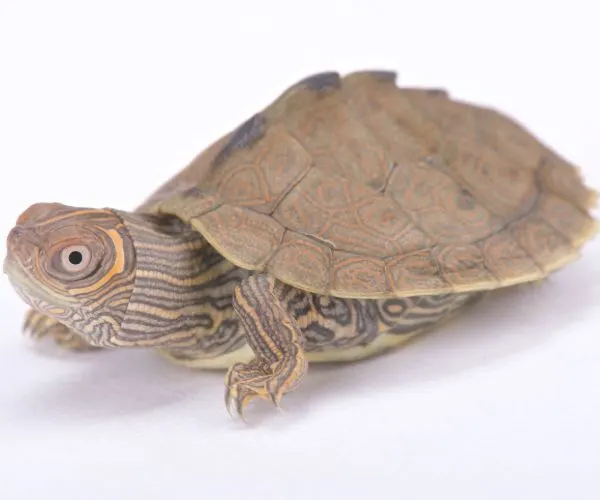
Map turtles are also called sawbacks because many have a raised keel along the shell. Useful species pages include the Mississippi map turtle, northern map turtle, Texas map turtle, Cagle’s map turtle, false map turtle, Alabama map turtle, Ouachita map turtle, and Barbour’s map turtle.
Map turtle size can vary strongly by sex. Males of some species stay fairly small, while females can grow much larger. Do not choose a map turtle based only on male size unless sex and species are confirmed.
Musk Turtles

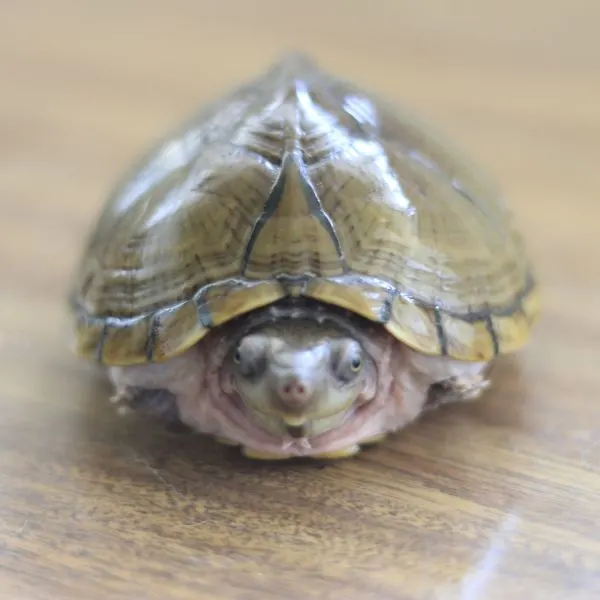
Musk turtles are among the best small aquatic turtle options for many keepers. Important pages include the common musk turtle, razorback musk turtle, loggerhead musk turtle, and flattened musk turtle.
Musk turtles often stay smaller than sliders and cooters, but they still need clean water, safe depth, easy resting areas, basking access, UVB, heat, and filtration.
Mud Turtles

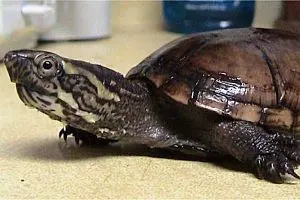
Mud turtles are small to medium semi-aquatic turtles. Useful pages include the eastern mud turtle, striped mud turtle, yellow mud turtle, Mississippi mud turtle, Florida mud turtle, white-lipped mud turtle, red-cheeked mud turtle, and scorpion mud turtle.
Many mud turtles need shallower water, resting access, land or semi-land areas, and secure hides. They should not be set up exactly like deep-water sliders.
Snapping Turtles

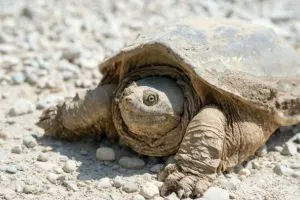
Snapping turtles are powerful freshwater turtles. Start with Snapping Turtle Facts, Common Snapping Turtle, Alligator Snapping Turtle, Types of Snapping Turtles, and Common Snapping Turtle vs Alligator Snapping Turtle.
Most snapping turtles are not beginner pets. They can become large, bite hard, and need specialized enclosures. For feeding information, see What Do Snapping Turtles Eat?.
Softshell Turtles

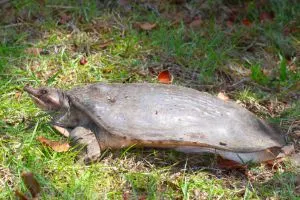
Softshell turtles have leathery shells and sensitive skin. Species pages include the Florida softshell turtle, spiny softshell turtle, smooth softshell turtle, Chinese softshell turtle, African softshell turtle, black softshell turtle, and Indian peacock softshell turtle.
Softshell turtles need excellent water quality, sand or safe substrate, injury prevention, and often large enclosures. Read the Softshell Turtle Tank Setup Guide before keeping one.
Cooters and Pond Turtles

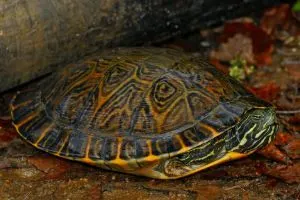
Cooter turtles are active freshwater turtles that often grow large. Related guides include the eastern river cooter, Florida red-bellied cooter, peninsula cooter, and coastal plains cooter.
These turtles are not ideal for small aquariums. Adults often need very large tanks, stock tanks, or outdoor ponds where legal and safe.
Terrapins and Wood Turtles

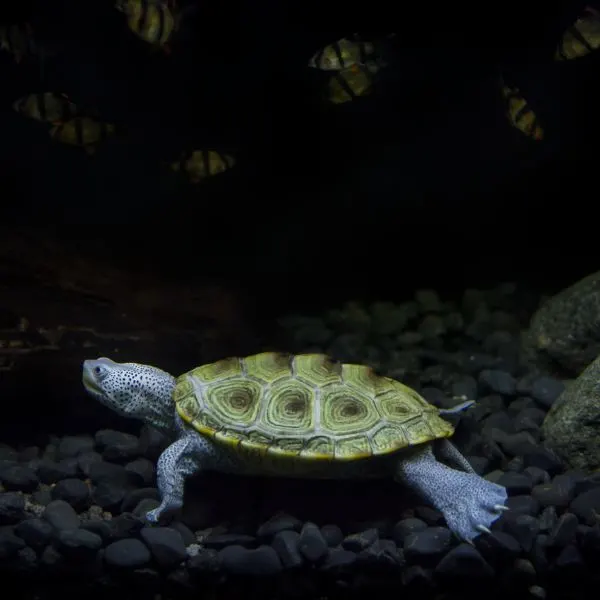
The diamondback terrapin is a beautiful coastal turtle with special care and legal considerations. Wood turtles, Blanding’s turtles, spotted turtles, bog turtles, and chicken turtles also need species-specific research before any care decision.
Some of these turtles are protected, regulated, or poor choices for beginner keepers. Do not collect them from the wild.
Side-Necked and Snake-Necked Turtles
Side-necked turtles withdraw the head sideways rather than straight back. Popular pages include the African sideneck turtle, African helmeted turtle, snake-necked turtle, and eastern snake-necked turtle.
These turtles can be fascinating, but temperature, diet, and enclosure needs are not the same as common North American sliders.
Other Interesting Turtle Species
Other species covered on AllTurtles include the European pond turtle, western pond turtle, Japanese pond turtle, Reeves turtle, golden thread turtle, Indian tent turtle, leaf turtles, black-breasted leaf turtle, Arakan forest turtle, Philippine forest turtle, pig-nosed turtle, and big-headed turtle.
Box Turtles

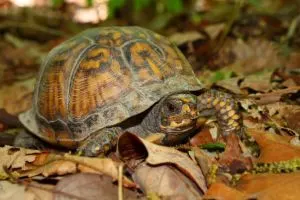
Box turtles are not regular aquatic turtle tank pets. Most need a land-based enclosure with humidity, hides, substrate, a shallow water dish, UVB, and heat.
Use the Box Turtle Species Guide, Box Turtle Setup Guide, and What Do Box Turtles Eat? for box turtle-specific care.
Tortoises
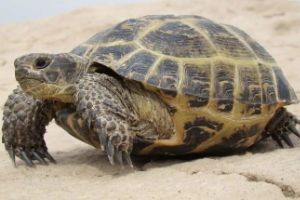
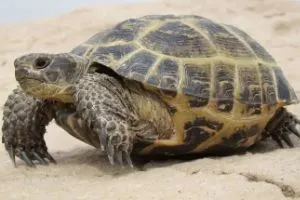
Tortoises are land-dwelling turtles. They need floor space, substrate, UVB, heat, safe plants, and a species-appropriate diet. They do not need a water-filled turtle tank.
Start with the Tortoise Species Guide, Tortoise Setup Guide, Small Tortoises, and What Do Tortoises Eat?.
Sea Turtles


Sea turtles are protected marine wildlife and are not pets. They are included on AllTurtles for education, identification, and conservation awareness.
Learn more in the Sea Turtle Species Guide, Sea Turtle Facts, Why Are Sea Turtles Endangered?, and Snorkeling with Sea Turtles.
Turtle Species by Habitat Type

Habitat is one of the best clues for understanding care needs and identification.
| Habitat type | Example species | Water needs | Basking needs | Care note |
|---|---|---|---|---|
| Ponds and lakes | Sliders, painted turtles, cooters | Moderate to deep water | Strong dry basking area | Need swimming room and filtration |
| Rivers and streams | Map turtles, cooters, some softshells | Clean moving water | Basking logs or platforms | Water quality matters heavily |
| Mud, marsh, and shallow wetlands | Mud turtles, musk turtles, chicken turtles | Shallow or mixed-depth water | Access to dry or semi-dry areas | Easy access to air is important |
| Coastal and brackish areas | Diamondback terrapin | Species-specific water chemistry | Dry basking area | Legal and shell health cautions apply |
| Land and forest edge | Box turtles | Shallow drinking and soaking water | Sun, UVB, and warm areas | Needs humidity and hides |
| Ocean | Sea turtles | Wild marine habitat | Natural sunlight and nesting beaches | Protected wildlife, not pets |
Turtle Species by Care Difficulty
Care difficulty depends on adult size, water quality, diet, legal status, and how much space the turtle needs.
| Species type | Tank or enclosure | UVB and heat | Diet pattern | Cleaning and water quality note |
|---|---|---|---|---|
| Musk and mud turtles | Smaller aquatic or semi-aquatic setup | Required | Omnivorous with animal foods and pellets | Water still fouls quickly without filtration |
| Painted turtles and map turtles | Medium aquatic setup | Required | Pellets, greens, insects, and aquatic foods | Need strong filtration and regular water changes |
| Sliders and cooters | Large aquatic setup | Required | More plant matter as adults | Messy and need oversized filtration |
| Softshell turtles | Large aquatic setup with sand | Required | Often more animal-heavy | Excellent water quality is critical |
| Snapping turtles | Large stock tank or pond-style setup | Species and setup dependent | Opportunistic omnivore | Messy, strong, and not for small tanks |
| Box turtles | Terrestrial enclosure | Required indoors | Omnivorous with species and age differences | Humidity and substrate hygiene matter |
| Tortoises | Tortoise table or outdoor enclosure | Required indoors | Species-specific plant diet | Substrate, hydration, and diet are key |
Turtle Species to Avoid for Most Beginners

Some turtles are impressive or commonly available, but they are poor choices for most beginner homes.
| Species or group | Why people want it | Main problem | Better alternative |
|---|---|---|---|
| Common snapping turtle | Interesting native turtle | Large size, bite risk, and enclosure needs | Musk turtle or mud turtle |
| Alligator snapping turtle | Dinosaur-like appearance | Very large and often legally restricted | Do not choose as a casual pet |
| Large softshell turtles | Unusual look and behavior | Large size, sensitive skin, and water quality needs | Painted turtle or musk turtle |
| Cooters | Attractive hatchlings | Large adults and heavy waste | Southern painted turtle or musk turtle |
| Large female sliders | Common and inexpensive as juveniles | Large adult tank needs | Male painted turtle or musk turtle |
| Rare Asian turtles | Beautiful shells or unusual appearance | Legal, sourcing, and conservation concerns | Captive-bred common species |
| Bog turtle | Very small adult size | Protected and not a pet turtle | Common musk turtle |
| Sea turtles | Famous marine turtles | Protected wildlife and not pets | Education and conservation only |
How to Choose the Right Turtle Species
Choose a turtle based on adult care needs, not price or hatchling size.
- Check the adult size for the species.
- Estimate enclosure size with the Turtle Tank Size Calculator.
- Confirm whether the turtle is aquatic, semi-aquatic, terrestrial, or marine.
- Check whether the species is legal where you live.
- Choose captive-bred turtles when keeping a legal pet species.
- Avoid wild-caught turtles.
- Plan for filtration, basking, UVB, heat, water quality, diet, and veterinary care.
- Remember that many turtles live for decades.
How to Identify a Turtle You Found
Start with location, shell shape, head markings, limb shape, habitat, and behavior. Do not collect a wild turtle just to identify it.
Helpful resources include the Turtle Identification Guide, Turtles in the USA, Turtles in Canada, Turtles in Eurasia, Turtles in Central America, and Turtles in South America.
If a turtle is crossing a road, move it only when it is safe, and move it in the direction it was already going. Do not take it home.
Basic Turtle Care by Species Type
Use this chart to choose the correct care path.
| Species type | Primary care guide | Best setup link | Food link | Common mistake |
|---|---|---|---|---|
| Aquatic turtles | Pet Turtle Basics | Turtle Tank Setup | What Do Turtles Eat? | Using a tank that is too small |
| Red-eared sliders | Red-Eared Slider | Red-Eared Slider Tank Setup | What Do Red-Eared Sliders Eat? | Underestimating adult size |
| Small aquatic turtles | Small Turtles | Tank Size Calculator | What Do Baby Turtles Eat? | Thinking small means low-maintenance |
| Box turtles | Box Turtle Species | Box Turtle Setup | What Do Box Turtles Eat? | Keeping them like aquatic turtles |
| Tortoises | Tortoise Species | Tortoise Setup | What Do Tortoises Eat? | Using the wrong humidity and diet |
| Sea turtles | Sea Turtle Species | Wild marine habitat only | What Do Sea Turtles Eat? | Treating protected wildlife like pets |
Legal and Conservation Notes

Always check local, state, national, and international laws before buying, selling, importing, collecting, or keeping any turtle species.
| Species or group | Concern | What the reader should do |
|---|---|---|
| Native turtles | May be protected or restricted | Check local wildlife agency rules before handling or keeping |
| Wild turtles | Collection can harm populations and may be illegal | Observe, photograph, and leave wild turtles where they belong |
| Small turtles under 4 inches in the U.S. | Sale as pets is restricted because of disease risk | Do not buy illegally sold tiny turtles |
| Sea turtles | Protected marine wildlife | Do not touch, feed, harass, collect, or keep |
| Bog turtles and spotted turtles | Often protected or regulated | Check laws and do not collect from the wild |
| Alligator snapping turtles | Large species with legal and conservation concerns | Research local laws and avoid casual ownership |
| Invasive turtles | Released pets can damage ecosystems | Never release a pet turtle into the wild |
Turtles can also carry Salmonella. Wash your hands after touching turtles, tank water, food bowls, substrate, or equipment. Do not clean turtle supplies in the kitchen sink.
When to See a Vet
Find a reptile veterinarian before you need one. See a vet if a turtle shows any of these signs.
- Refusing food when temperatures are correct
- Swollen, closed, cloudy, or crusty eyes
- Nasal discharge or bubbles from the nose
- Wheezing, clicking, or open-mouth breathing
- Floating sideways or trouble diving
- Soft shell, shell pits, white patches, bad smell, or open wounds
- Extreme lethargy or sudden behavior change
- Bites, burns, cracks, falls, or predator injuries
Helpful health guides include Turtle First Aid, Shell Rot, Turtle Respiratory Infections, and Turtle Stress Signs.
Related AllTurtles Guides
- Turtle Species Finder
- Turtle Identification Guide
- Turtle Tank Size Calculator
- Turtle Tank Setup Guide
- Best Pet Turtles
- Pet Turtle Basics
- Small Turtles
- Box Turtle Species
- Tortoise Species
- Sea Turtle Species
- Turtle Laws
- Turtle Adoption
- Turtle Care Sheets
Sources and Further Reading
- Animal Diversity Web, Testudines
- IUCN TFTSG, Turtles of the World Checklist
- Turtle Survival Alliance, Species Database
- CDC, Salmonella Outbreak Linked to Small Turtles
- NOAA Fisheries, Sea Turtles
- Maryland DNR, Turtles and Tortoises Field Guide
- University of Georgia SREL, Turtles of South Carolina and Georgia
FAQ
How many turtle species are there?
The number changes as taxonomy is updated. The IUCN TFTSG checklist currently tracks 364 living turtle and tortoise species.
What are the main types of turtles?
The main practical groups are aquatic turtles, semi-aquatic turtles, box turtles, tortoises, and sea turtles. Pet keepers should focus on the exact species because care needs vary widely.
What is the best turtle species for beginners?
For many keepers, captive-bred musk turtles, mud turtles, painted turtles, and some map turtles are better beginner options than large sliders, cooters, softshell turtles, or snapping turtles.
What turtle species stay small?
Common musk turtles, razorback musk turtles, eastern mud turtles, striped mud turtles, and some smaller painted or male map turtles can stay relatively small as adults. Always check adult size, not baby size.
What is the most common pet turtle species?
The red-eared slider is one of the most common pet turtles, but it often needs a large adult tank and strong filtration.
Are box turtles the same as aquatic turtles?
No. Box turtles are land-based or semi-terrestrial turtles. They need a terrestrial enclosure, humidity, hides, substrate, and a shallow water dish rather than a deep aquatic tank.
Are tortoises turtles?
Yes. Tortoises are land-dwelling turtles in the family Testudinidae. Their care is different from aquatic turtle care.
Are sea turtles pets?
No. Sea turtles are protected marine wildlife and should never be kept as pets.
Can I keep a wild turtle I found?
Usually no. Wild turtle collection may be illegal and can harm local populations. If you want a pet turtle, choose a legal captive-bred turtle or adopt through a reputable rescue.
How do I identify a turtle species?
Use location, habitat, shell shape, head markings, limb shape, and size. Take photos from a safe distance and use the AllTurtles Turtle Identification Guide or regional turtle guides.
Final Thoughts
The best turtle species for you depends on adult size, setup space, care experience, legal status, and long-term commitment. Do not choose a turtle because it is cheap, tiny, or easy to find.
Start with the Turtle Species Finder, compare the species groups above, then read the full care guide before buying, adopting, or setting up an enclosure.