
Turtles and dinosaurs have both roamed the Earth for eons. It’s natural to wonder if these ancient reptiles are one and the same, or how they might be connected in the tree of life.
This guide gives a clear answer on whether turtles are dinosaurs and explores their evolutionary relationship. We’ll outline when turtles first appeared, how they survived alongside dinosaurs, and clarify what truly counts as a dinosaur.
Table of Contents
Are Turtles Dinosaurs?

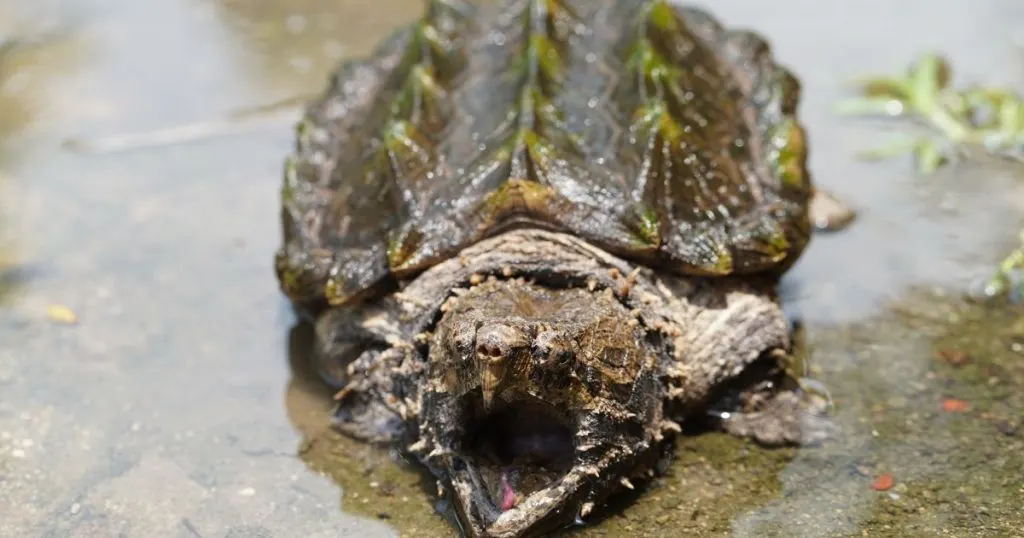
Answer: No, turtles are not dinosaurs. They are reptiles, but they sit on a completely separate branch of the reptile family tree. In other words, turtles and dinosaurs are distinct groups that diverged from a common ancestor long ago.
Turtles first appeared well over 200 million years ago, around the Triassic Period. That is roughly the same era when the earliest dinosaurs emerged. Fossil evidence shows turtle ancestors (such as Eunotosaurus) dating to about 260 million years ago (Permian period), even before true dinosaurs evolved in the Triassic. These shelled reptiles lived alongside dinosaurs throughout the Jurassic and Cretaceous periods.
Importantly, turtles survived the mass extinction 66 million years ago that wiped out all non-avian dinosaurs. Today’s turtles are ancient survivors of the dinosaur age, but that doesn’t make them dinosaurs themselves.
By definition, dinosaurs were a specific group of reptiles characterized by an upright limb posture with legs positioned beneath their bodies. Turtles do not share that trait – their legs sprawl out to the sides, and they evolved a unique protective shell.
A turtle’s shell is made of a carapace (top shell) and a plastron (bottom shell), features no dinosaur ever had. Turtles have many reptilian traits, but an upright stance and other dinosaur characteristics are not among them. In short, turtles are reptiles but not dinosaurs.
| Item | Details |
|---|---|
| Are turtles dinosaurs? | No. Turtles belong to their own order (Testudines) and are not part of the Dinosauria clade. |
| Origins | Turtle lineage arose ~230 million years ago (Triassic). Dinosaurs first appeared ~240–230 million years ago in the Triassic. |
| Coexistence | Turtles and non-avian dinosaurs coexisted for over 150 million years. Turtles survived the end-Cretaceous extinction; dinosaurs (except birds) did not. |
| Living examples | Roughly 350–360 turtle species live today. The only living dinosaurs are birds (all other dinosaur lineages are extinct). |
| Notable traits | Turtles have a bony shell (carapace & plastron) and sprawling limbs. Dinosaurs had no shells and typically stood upright on their limbs. |
Sometimes people refer to modern reptiles like turtles or crocodiles as “living dinosaurs.” That label is not scientifically accurate. The only creatures considered living dinosaurs are birds, which evolved directly from the true dinosaurs.
Turtles may look prehistoric and ancient, but they hail from a separate lineage of reptiles. Being old or reptilian does not make an animal a dinosaur – it must fall within the specific dinosaur family tree (which turtles do not).
Are Turtles Related to Dinosaurs?
Answer: Yes, in a distant sense, turtles and dinosaurs are related. Both belong to the broader group of reptiles and share a very ancient common ancestor. Think of them as long-separated cousins on the evolutionary tree.
Modern genetic studies have revealed that turtles are more closely related to crocodilians and dinosaurs (including birds) than to other reptiles like lizards and snakes. In fact, DNA analyses place turtles on the same major branch of reptiles as the archosaurs – the “ruling reptiles” that include non-avian dinosaurs, birds, and crocodiles.
Evolutionary family tree: Over 250 million years ago, reptiles split into a few major lineages. One branch led to the archosaurs – a group that includes dinosaurs, crocodiles, and eventually birds. Another branch led to the lepidosaurs (lizards, snakes, tuataras).
Modern evidence places turtles on the archosaur side of that split. In other words, turtles share a closer ancestor with dinosaurs (and crocs and birds) than turtles do with lizards. Some scientists even name this large grouping of turtles plus archosaurs Archelosauria, highlighting their kinship. This does not mean turtles descended from dinosaurs – rather, it means turtles and dinosaurs had a common ancestor way back in the Permian Period.
It’s important to note that being “related” in this way does not mean turtles evolved from dinosaurs or vice versa. Instead, imagine a family tree: the common ancestor of turtles and dinosaurs was likely a primitive reptile that lived roughly 260 million years ago.
From that ancestral branch, one lineage eventually gave rise to dinosaurs, and a different lineage led to early turtles. Turtles then evolved their own unique traits (like shells) on a separate path from the dinosaur line. So while turtles and dinosaurs share an ancient heritage, a turtle is no more a dinosaur than a distant cousin is your sibling.
In summary: Turtles are not dinosaurs, but they are part of the same vast reptilian heritage. DNA and fossil evidence indicate turtles are distant relatives of dinosaurs. In fact, turtles have a closer kinship to the dinosaur/bird branch of reptiles than they do to lizards and snakes. This makes turtles and dinosaurs like very distant cousins in evolutionary terms, connected through a common ancestor in the deep past.
Frequently Asked Questions
What counts as a dinosaur?
A “dinosaur” is defined as any animal that belongs to the clade Dinosauria – which includes the last common ancestor of Triceratops and modern birds and all of that ancestor’s descendants. In plainer terms, dinosaurs were land-dwelling reptiles of the Mesozoic Era with certain key characteristics. Not every prehistoric reptile was a dinosaur. For example, pterosaurs (flying reptiles) and marine reptiles like plesiosaurs lived in the age of dinosaurs but are not classified as dinosaurs.
Several key features distinguish true dinosaurs:
- Limb posture: Dinosaurs had legs positioned straight under their body (an upright stance), unlike the sprawling legs of turtles, crocodiles, and lizards.
- Hip structure: They shared a common hip anatomy inherited from their ancestor, which is used to classify major dinosaur groups.
- Lineage: Only animals descended from the dinosaur family’s founding ancestor count as dinosaurs. Turtles, crocodiles, marine reptiles, etc. do not fall in that lineage.
- Extinction (except birds): With the exception of birds (which are avian dinosaurs), all dinosaurs died out in the end-Cretaceous extinction ~66 million years ago. No non-bird dinosaur species exist today.
In short, being a reptile isn’t enough to be a dinosaur. An animal must be in that specific dinosaur lineage and possess the upright, land-adapted body plan of Dinosauria. That’s why turtles (despite being reptiles from the same era) are not considered dinosaurs.
Did turtles live alongside dinosaurs?
Yes – turtles and dinosaurs shared the planet for a very long time. Early turtles arose around the same time as the earliest dinosaurs, so they coexisted throughout the Jurassic and Cretaceous periods. Fossil records show turtles present in dinosaur-era strata. For example, ancient turtles swam in Jurassic seas while dinosaurs like Allosaurus walked on land, and Cretaceous side-necked turtles paddled in rivers as Tyrannosaurus and Triceratops roamed the landscape.
When the catastrophic asteroid impact struck 66 million years ago, it triggered mass extinctions. Non-avian dinosaurs could not survive that event, but many turtles managed to pull through. Thanks to their aquatic habitats or burrowing habits (and perhaps a bit of luck), a number of turtle species survived the end-Cretaceous extinction. That’s why turtles are still here today even though their dinosaur contemporaries (aside from birds) are long gone.
Which came first, turtles or dinosaurs?
Turtle ancestors likely appeared slightly before the first dinosaurs. Paleontologists have found turtle-like fossil reptiles (such as Eunotosaurus) dating to about 260 million years ago in the late Permian Period, whereas the earliest true dinosaurs evolved roughly 240–230 million years ago in the Triassic Period. In practical terms, both groups originated around the Triassic, but the proto-turtle lineage may have had a head start of a few million years.
To put it in timeline perspective:
- ~260 million years ago (Permian): A primitive turtle relative like Eunotosaurus lived, showing some early turtle-like features (wide ribs, etc.).
- ~240–230 million years ago (Triassic): The first dinosaurs arose. Around this time (220+ million years ago), the earliest true turtles (e.g. Odontochelys) swam in Triassic waters with partial shells.
- Jurassic–Cretaceous Periods: Turtles and dinosaurs diversified and coexisted for over 150 million years of Earth’s history.
- 66 million years ago: Non-avian dinosaurs went extinct. Many turtle lineages survived and continued into the Cenozoic Era (and are still around today).
So, the turtle lineage is at least as old as the dinosaur lineage – and possibly a bit older. While the first true turtles and the first true dinosaurs both emerged in the Triassic, proto-turtles were on the scene slightly earlier.
Are tortoises dinosaurs?
No. Tortoises are a type of turtle (specifically land-dwelling turtles), and like all turtles they are not classified as dinosaurs. Tortoises belong to the turtle order Testudines, entirely outside the dinosaur lineage. They did coexist with dinosaurs in prehistoric times, but a tortoise is no more a dinosaur than any other turtle is.
Tortoises often get called “living fossils” because they resemble ancient forms and can live for a very long time. However, they did not descend from dinosaurs. Instead, tortoises and dinosaurs had a common reptilian ancestor way back, making them distant relatives but very different creatures. A giant Galápagos tortoise and a Triceratops might both be reptiles, for example, but they are separated by hundreds of millions of years of evolution.
Did turtles evolve from dinosaurs?
No – turtles did not evolve from dinosaurs. The turtle lineage split off on its own path long before any dinosaur (like a Tyrannosaurus or Apatosaurus) existed. Both turtles and dinosaurs evolved from a much earlier common ancestor in the Permian/Triassic timeframe, but after that they went their separate ways.
As reptiles diversified in the Triassic Period, one branch of the family tree led to dinosaurs, and a completely different branch led to early turtles. Over millions of years, turtles developed their trademark shells, body plan, and way of life independently of the dinosaur line. In evolutionary terms, turtles are cousins of dinosaurs, not descendants. So while turtles and dinosaurs share an ancient ancestral link, a turtle is not “from” a dinosaur at all.
More reads on All Turtles
- What Is The Difference Between Turtles And Tortoises?
- Are Turtles Reptiles or Amphibians?
- Complete Alligator Snapping Turtle Care Guide
- Common Snapping Turtle Vs Alligator
- 7 Types Of Sea Turtle Species

Sources
- Natural History Museum – “Turtles have lived for 230 million years”
- California Academy of Sciences – 2014 press release on turtle ancestry (“Archelosauria” grouping of turtles, dinosaurs & crocs)
- Encyclopædia Britannica – Turtle evolutionary history and classification
- Iowa State University News – Nature Communications study tracing turtle & dinosaur common ancestor’s genome
- Environmental Literacy Council – “Who is the turtle ancestor?”