
Turtles make fascinating pets and wild neighbors. Understanding what turtles like in terms of food, environment, and activities helps you care for them better. This guide covers what turtles enjoy eating, the kind of habitat they prefer, and fun things they do, all focused on pet turtles and common species in the United States.
This friendly, fact-filled guide is split into three parts: diet, habitat, and enrichment. You’ll learn the best foods to feed, how to set up a comfortable turtle environment, and ways to keep your turtle active. Whether you’re a new turtle owner or an experienced hobbyist, read on to discover how to keep your turtle happy and healthy year-round.
Table of Contents
- Overview
- Turtle Diet: What Do Turtles Like to Eat?
- Habitat: What Environment Do Turtles Like?
- Enrichment: What Do Turtles Like to Do?
- Frequently Asked Questions
- Sources
Overview
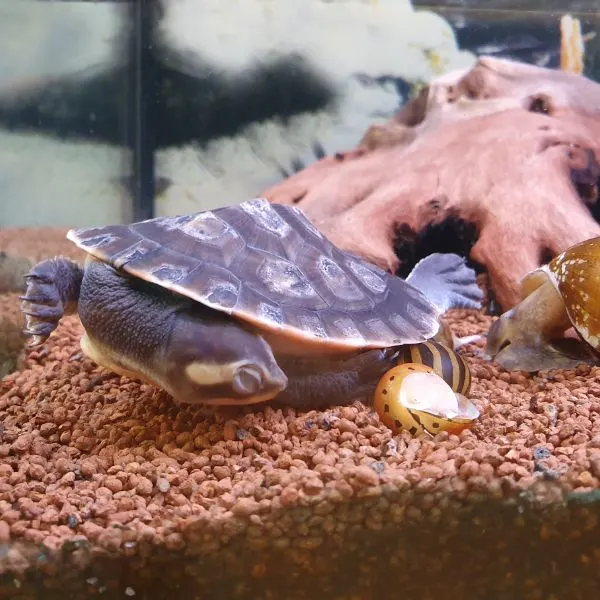

Turtles generally like warm environments, clean water, and a varied omnivorous diet. Most pet turtles are omnivores that enjoy eating both animal protein (like insects or fish) and plant matter (leafy greens and veggies). They love to bask under heat or sunlight to warm up, and they need places to swim, explore, hide, and rest. Meeting all these needs (proper food, habitat, and enrichment) will keep your turtle healthy and active.
In the wild, turtles spend much of their day foraging for food and regulating their body temperature. Pet turtles show similar behaviors: they eagerly chase live prey or nibble on veggies, and they bask to soak up heat and UVB light for strong shells. They also explore their tanks or enclosures, and some species dig or burrow. By providing a balanced diet and an engaging habitat, you can observe your turtle’s favorite natural activities right in your home.
Top Tips for a Happy Turtle
- Offer a balanced diet: Feed a mix of protein (insects, worms, fish) and vegetables/fruits appropriate for the species to meet all nutritional needs.
- Ensure proper habitat: Keep the aquarium or enclosure clean with warm water (around 24°C / 75°F) and a dry basking area (~29°C / 85°F). Provide UVB lighting for shell health.
- Provide a basking spot: All turtles need a warm, dry area to climb out and bask. Use a heat lamp and sturdy platform so they can dry off and absorb heat safely.
- Add hiding spots and decor: Turtles like places to hide and explore. Include plants (real or fake), logs, rocks, or caves so your turtle feels secure and entertained.
- Offer enrichment and exercise: Let your turtle chase live feeder fish or insects occasionally, or place treats around the tank. This encourages natural hunting and foraging behavior and keeps them active.
| Season | Hatchlings (0 to 1 yr) | Juveniles (1 to 4 yrs) | Adults (5+ yrs) |
|---|---|---|---|
| Spring | Feed daily (small portions). Rapid growth means high appetite. | Feed daily or every 2 days. Activity increases after winter. | Feed every 2 to 3 days. Resume regular feeding after winter slow-down. |
| Summer | Feed daily. Peak appetite with warm temps. | Feed daily or 5× weekly. High activity levels. | Feed ~3× weekly. Ensure variety to prevent boredom. |
| Fall | Feed daily if active. Appetite may start to decrease late fall. | Feed ~5× weekly until cooler weather slows them. Gradually reduce if preparing to brumate. | Feed 2× weekly. If outdoors, stop feeding before brumation begins in late fall. |
| Winter | If kept warm indoors, feed daily. Hatchlings should not hibernate. | If warm indoors, feed ~3× weekly (lower appetite with shorter days). If brumating (outdoors), do not feed during dormancy. | If indoors and active, feed every 3 days (may eat less). Brumating adults do not eat in winter. |
Turtle Diet: What Do Turtles Like to Eat?
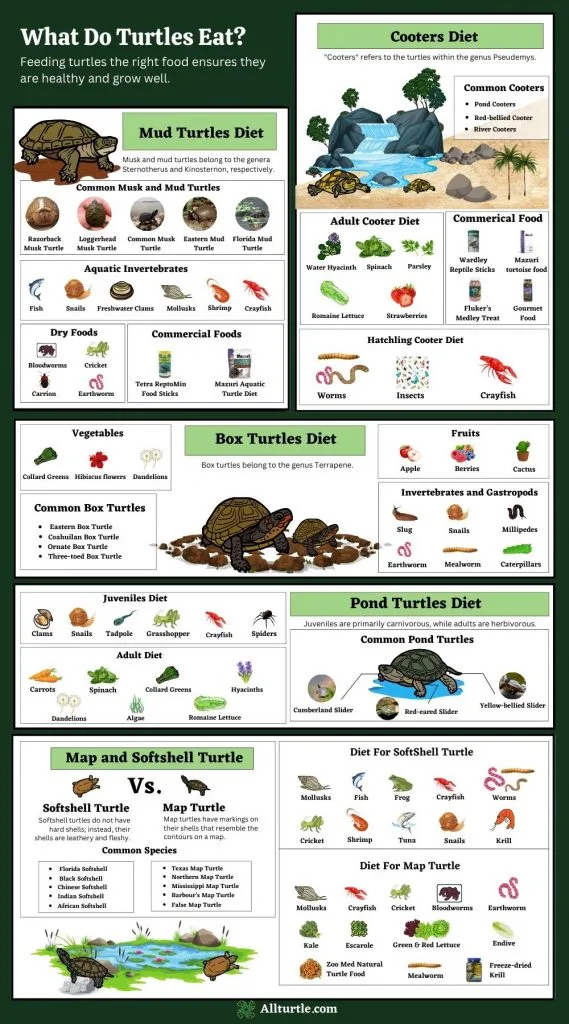
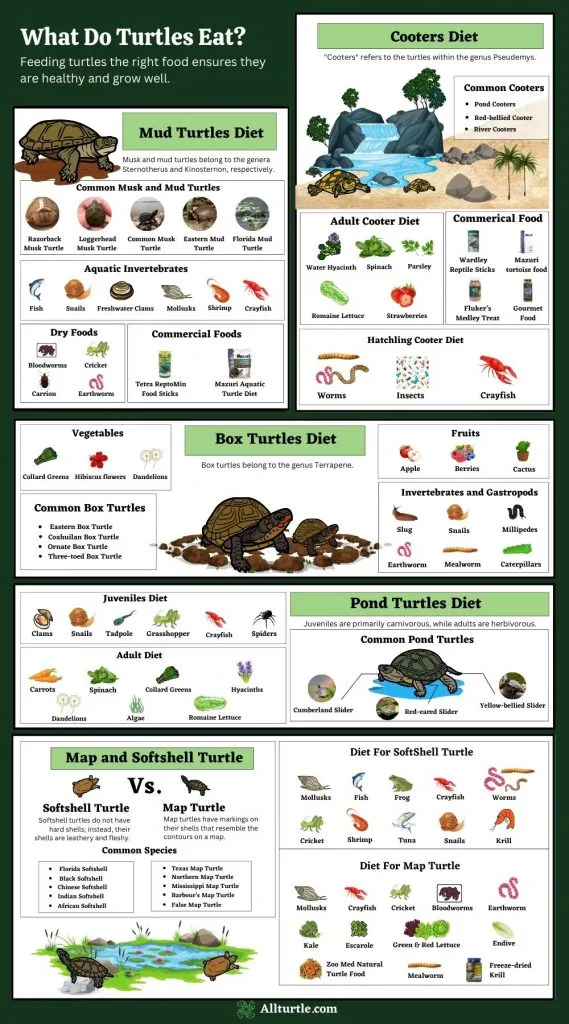
Answer: Most turtles love to eat a variety of foods. As omnivores, pet turtles will happily eat insects, worms, fish, leafy greens, veggies, and fruits. Aquatic species like sliders and painted turtles tend to be more carnivorous (meat-eating) when young, then shift to include more plants as adults. Land turtles and tortoises lean more herbivorous (plant-eating), enjoying greens and veggies. A varied diet is key. Many turtles get bored with the same food every day and need diverse nutrients for health.
A pet turtle eating pieces of strawberry and banana. Many turtles enjoy the occasional fruit treat, but their staple diet should be balanced with vegetables and proteins for proper nutrition.
Foods Pet Turtles Like:
- Protein sources: Insects (crickets, mealworms, earthworms), snails and slugs, cooked lean meats, and feeder fish or shrimp. Live prey like guppies or crickets let turtles exercise by chasing their food.
- Vegetables and greens: Dark leafy greens (romaine, dandelion greens, collards, kale), shredded carrots, squash, green beans, and edible aquatic plants (like duckweed or water lettuce). These provide vitamins and calcium.
- Fruits (as treats): Berries, melon, apple slices, banana, or mango. Most turtles have a sweet tooth for fruit, but offer fruit sparingly (10 to 20% of diet) due to high sugar.
- Commercial turtle pellets: Quality turtle pellets contain a mix of protein and veggie matter and are formulated with vitamins. Pellets are a convenient staple, but should be supplemented with fresh foods.
- Calcium sources: Cuttlebone or calcium blocks can be left in the tank for turtles to nibble. Also, gut-loaded insects or dusting food with calcium powder helps shell and bone health.
Feeding Tips: Feed your turtle in water (for aquatic species) so they can swallow easily. Offer only what they can eat in about 15 to 20 minutes to avoid overfeeding. Young turtles (hatchlings) need daily feeding because they are growing fast. Adults eat less often. Generally, feeding every 2 to 3 days is sufficient. Stick to a schedule and portion size that keeps your turtle at a healthy weight (not too skinny and not obese). Remove uneaten food so it doesn’t foul the tank water or rot in the enclosure.
Foods to Avoid: Not everything is safe for turtles. Never feed processed human foods (no bread, pasta, candy, etc.) and avoid dairy (turtles cannot digest milk products). Salty or fried foods are harmful. Also skip raw meat from the grocery store – it lacks calcium and can spoil quickly. Don’t offer poisonous plants or wild mushrooms.
For aquatic turtles, avoid fatty fish like goldfish as a regular diet (they can cause vitamin deficiencies). It’s best to source insects and fish from pet stores rather than the wild (to avoid pesticides or parasites). Variety is important: mix up the menu so your turtle gets all necessary nutrients and doesn’t get fixated on only one type of food.
Seasonal Notes: Turtles eat less in colder months, especially if kept outdoors. In fall, as temperatures drop, a turtle’s appetite will decrease and it may stop eating entirely if it goes into brumation (reptile hibernation). If your turtle is going to brumate, experts recommend not feeding for a couple of weeks before dormancy, so the gut is empty during winter.
Never force a turtle to eat when it’s preparing to hibernate – their metabolism is slowing down. In winter, indoor turtles might continue to eat on a normal schedule if kept warm and on a regular light cycle. Always observe your turtle’s behavior and adjust feeding. If they remain active, continue offering food on schedule. If they are sluggish from cold, offer less. Come spring, turtles regain appetite and should be fed generously as they become active again.
Habitat: What Environment Do Turtles Like?
Answer: Turtles like an environment that mimics nature – warm, with both water and dry areas, and plenty of places to hide or explore. Aquatic and semi-aquatic turtles (like sliders, cooters, and map turtles) thrive in a tank that has clean water for swimming and a dry basking platform. Terrestrial turtles (like box turtles) prefer a moist, soil-based terrarium with shelters.
All turtles need warmth (ambient temperatures around 24 to 29°C / 75 to 85°F) and access to UVB lighting to stay healthy. They also appreciate environmental enrichment: plants, logs, rocks, and substrates that let them dig or climb. A boring or barren tank will lead to an unhappy turtle – they do best in a habitat with variety and opportunities to engage their senses.
A red-eared slider turtle basking under a heat lamp on a platform. Basking spots allow turtles to dry off completely and absorb heat and UVB, which are vital for their shell and overall health.
Key Elements of a Turtle’s Habitat:
Water area: Aquatic turtles need a spacious tank with filtered water. Provide enough depth for swimming and diving – at least 2 to 3 times the turtle’s shell length in depth. The water must be kept clean (use a strong filter) and at a suitable temperature (around 24 to 27°C / 75 to 80°F for most species). Land turtles need a shallow water dish for soaking and drinking.
Basking platform: All turtles require a dry area to climb out and bask. Use a turtle dock, flat rock, or platform that is easy to access. Position a heat lamp above it to maintain basking spot temperature (~32°C / 90°F for many species). The basking area should be completely dry and stable so the turtle can fully dry its shell and warm up.
UVB lighting: Provide a UVB lamp during the day (12 hours on). UVB rays enable turtles to produce vitamin D3, which is crucial for calcium metabolism and shell growth. Without UVB, captive turtles can develop metabolic bone disease. Replace UVB bulbs as directed (usually every 6 to 12 months) since they dim over time.
Land area & substrate: Semi-aquatic turtles appreciate some land space or a haul-out area with substrate. Terrestrial turtles (like box turtles or tortoises) need substrate such as topsoil, coconut coir, or mulch that they can dig into. Many turtles love to burrow or at least scratch around. Ensure the substrate is clean, pesticide-free, and kept slightly moist for humidity (especially for species that need high humidity).
Hiding spots & enrichment: Turtles feel secure when they have places to hide. Add caves, half-logs, pieces of PVC pipe, or dense plants where your turtle can retreat. Also decorate the tank with smooth rocks, driftwood, or artificial plants. These give visual barriers and things to investigate. Change the arrangement occasionally (not too often) to keep it interesting, but avoid moving their hides constantly (turtles can get stressed if their environment changes too much). A well-decorated enclosure reduces stress and encourages natural behaviors.
Tank Size: Turtles need adequate space as they grow. A common rule is at least 38 to 57 liters (10 to 15 gallons) of water per 2.5 cm (1 inch) of shell length. For example, a 10 cm (4 inch) turtle should have a 150-liter (~40-gallon) tank minimum. Larger is always better.
Overcrowding can lead to dirty water and territorial stress. If you keep multiple turtles, make sure the tank is big enough and provide multiple basking and hiding spots to prevent fighting. Outdoor ponds can be a great habitat for turtles in suitable climates, offering even more space and natural sunlight. Just ensure outdoor enclosures are escape-proof and safe from predators.
Temperature & Humidity: Turtles are ectothermic (cold-blooded), so they rely on their environment to regulate body temperature. Maintain a temperature gradient in the tank – the water on the cooler side (~24°C / 75°F) and the basking area warmer (around 32°C / 90°F). Use a submersible aquarium heater to keep water temperature stable, especially in cooler months.
Monitor with thermometers. At night, temperatures can drop a bit (down to ~21°C / 70°F) as long as they remain within a safe range for the species. Humidity is important for land turtles: most box turtles need moderate to high humidity (60 to 80%). Achieve this by misting the enclosure and providing moist substrates or moss in their hide boxes. In contrast, desert tortoises prefer lower humidity. Research your turtle’s specific needs and adjust accordingly.
Cleanliness: A turtle’s environment must be kept clean to prevent disease. For aquatic turtles, invest in a good filter and perform regular partial water changes (e.g. 25% weekly) to keep ammonia and nitrates low. Uneaten food and waste can dirty the water quickly, leading to shell rot or infections.
Land turtle enclosures should have spot cleaning daily (remove feces and old food) and full substrate changes periodically. Turtles can carry Salmonella bacteria, so always wash your hands after handling the turtle or cleaning the tank. A clean habitat = a healthy turtle.
Seasonal Behavior in Habitat: Be mindful of seasonal changes. In winter, indoor turtles might become less active if the room temperature or light cycle drops. Keep their day/night cycle consistent (using timers for lights) to prevent confusion.
Outdoor turtles will often dig into mud or leaf litter to brumate when temperatures fall. If you overwinter turtles outdoors in cold regions, provide a safe hibernation area (insulated and predator-proof). Never let a pet turtle brumate if it is underweight or ill – it may not survive.
You may choose to bring turtles indoors during extreme cold snaps for safety. In spring and summer, turtles become more active, bask more, and may even roam their enclosure more frequently (outdoor turtles may attempt to escape in search of new territory or mates – ensure fencing is secure).
Also note, in spring female aquatic turtles might look for places to lay eggs. If you have a female, even without a male, provide an appropriate nesting area (like a box of sand/soil) so she can deposit eggs if needed. This prevents egg-binding health issues.
Enrichment: What Do Turtles Like to Do?
Answer: Turtles may not play fetch like a dog, but they do have activities they enjoy! Basking in a warm spot is a turtle’s favorite daily pastime – you’ll often see your turtle stretched out under the heat lamp, soaking up warmth.
Turtles also like exploring their environment: they will roam around their tank or enclosure, investigate new objects, and sometimes dig in the substrate. Aquatic turtles love to swim and can be very active in water, especially when chasing something.
Many turtles enjoy hunting live prey; the “thrill of the chase” provides both exercise and mental stimulation. While turtles are generally solitary and not overly social, some recognize their keepers and may come to you expecting food or gentle shell rubs.
Overall, keeping a turtle enriched means giving it opportunities to bask, swim, forage, hide, and occasionally interact with you or its surroundings in a safe way.
Activities and Enrichment Ideas for Turtles:
Basking & warming up: As mentioned, turtles relish basking. Make sure the basking area is easily accessible. You might see your turtle stretching its neck and limbs out – this is a sign it’s comfortable and enjoying the heat. Basking helps them regulate their body temperature and is vital for their health.
Swimming & diving: Aquatic turtles are agile swimmers. Provide a tank long enough for short “laps.” You can occasionally change the water depth or add an air stone/water current for enrichment – many strong-swimming turtles (like red-eared sliders) enjoy riding a gentle current or swimming against it for exercise.
Foraging & hunting: Stimulate your turtle’s natural hunting instincts by offering live foods. For example, let them chase a few guppies, minnows, or ghost shrimp in the tank. You can also release crickets or worms in a separate feeding container – your turtle will enjoy stalking and catching them.
Another idea is to hide pieces of their food around the enclosure (in the water or on land) so they have to sniff and search for treats. This turns feeding time into a fun scavenger hunt, keeping the turtle’s mind active.
Exploring & toys: Turtles are curious. They will push or nudge objects in their environment. You can introduce safe toys like a ping-pong ball or a hard plastic floating toy (for aquatic turtles to bump into).
Some turtles like to rearrange tank decor. Flat river rocks or small weighted balls can become “toys” they shove around. Ensure any object is too large to swallow and has no sharp edges. Puzzle feeders (plastic balls with holes that release food) can also engage a turtle’s problem-solving as they roll it to get treats.
Climbing & digging: Many turtles will climb if given the chance. Provide partially submerged logs or a ramp – your turtle might climb on top or use it to exit the water. Land turtles, and even aquatic ones if given a shallow sandbox, love to dig and burrow. You can offer a tray of moist sand or moss as a “dig box” for enrichment, allowing your turtle to exercise its natural digging behavior. Just supervise to ensure they don’t eat the substrate.
Hiding & resting: Turtles appreciate a cozy hide. They often like to squeeze under a piece of wood or into a cave where they feel secure. Rearranging their enclosure to include multiple hiding spots can reduce stress, especially if you have more than one turtle (so they can get out of each other’s sight).
Turtles will also sleep in their hides or even underwater wedged under plants or decorations. This is normal. Ensure they can reach the surface to breathe as needed.
Interaction (on their terms): While turtles do not crave human affection like a dog or cat might, some become tame and learn to trust their owners. Your turtle might swim up to you when you approach, especially if it associates you with food.
A few turtles even seem to enjoy gentle scratching on their shell or neck – use a soft toothbrush to rub their shell if they appear to like it. Always be gentle and watch the turtle’s reaction. If it pulls away or hides, respect that.
Avoid excessive handling, as most turtles dislike being constantly picked up (it can be stressful). Instead, you can let a turtle walk in a safe, enclosed area for a change of scenery (e.g., a small kiddie pool with some shallow water or grass, supervised closely). Be cautious with this: never leave a turtle unattended outside its tank, and ensure there are no hazards or predators (like dogs) around.
Do Turtles Get Bored? They can, if kept in a sterile environment with nothing to do. A bored turtle might become lethargic, refuse to eat, or obsessively try to escape the tank. To prevent boredom, regularly enrich their environment: add a new plant, change the tank layout occasionally, or introduce a new safe toy.
Even offering a different food or feeding in a separate container can break the monotony. Turtles don’t need nonstop entertainment, but a dull environment can lead to stress. Make sure the tank is appropriately sized (an undersized tank leads to constant escape attempts), and that your turtle has varied diet and habitat features.
Once you add enrichment, you’ll likely see your turtle become more curious and engaged. For example, after introducing some safe aquatic plants or a new log, many turtles will immediately investigate and interact with these new items.
Outdoor Time: On warm days, many turtles benefit from supervised outdoor time in natural sunlight. If you have a secure yard, you can let a turtle roam in a pen or enclosure for a short while. Natural sun provides the best UVB and your turtle can experience new smells and sights (like grass, insects, etc.).
Caution: Always supervise closely and ensure the area is escape-proof (turtles are surprisingly fast and adept at finding holes). Keep an eye out for predators (dogs, birds) and do not leave the turtle in direct sun too long without shade or water access (they can overheat).
A shallow kiddie pool or a fenced garden area can serve as a safe outdoor play area. Many turtles will become more vibrant and active with occasional outdoor enrichment, but remember to bring them back in and never release pet turtles into the wild.
Quick Do’s and Don’ts Checklist:
- DO provide a varied diet (insects, greens, etc.) and use calcium/vitamin supplements as needed.
- DO maintain clean water and proper temperature in the habitat at all times.
- DO give your turtle places to hide and things to explore. A stimulated turtle is a happy turtle.
- DO observe your turtle’s behavior – learn its individual likes (favorite foods, basking times) to better cater to its needs.
- DON’T feed fatty, processed, or toxic foods (no dairy, bread, chocolate, etc.). Stick to turtle-safe foods.
- DON’T house different species or very unequal sizes together. This can lead to stress or aggression.
- DON’T handle your turtle roughly or too often. Support its body if you must lift it, and avoid dropping or flipping it.
- DON’T ever release a pet turtle into the wild. It’s illegal in many areas and can harm local ecosystems (red-eared sliders, for example, have become invasive when released). Instead, rehome your turtle through a reptile rescue or responsible adopter if you cannot keep it.
Frequently Asked Questions
What is a turtle’s favorite food?
Turtles don’t have one “favorite” food, but many show a strong liking for protein-rich snacks. For example, aquatic turtles often go crazy for earthworms or juicy crickets. They also love small fish or shrimp. Box turtles and tortoises might get excited for a tasty worm or a strawberry. In general, a hungry turtle’s favorite food is whatever you’re offering at that moment! Just be sure to offer a balanced diet. Treats like waxworms or fruit should be given sparingly, even if your turtle acts like it’s their favorite thing in the world.
How do I know if my turtle is happy and healthy?
A content turtle will be active and alert during the day. It will eagerly eat when fed, regularly bask, and explore its surroundings. Healthy turtles have clear eyes, no discharge from nose or mouth, and a hard, smooth shell. They should swim without difficulty (for aquatic species) and walk without wobbling (for land species).
A happy turtle often has a routine, for instance, basking each morning, begging for food when it sees you, or resting in its favorite hide. If your turtle is constantly hiding, refusing food, has swollen eyes, or is lethargic, it may be stressed or ill. Regular check-ups with a reptile veterinarian can ensure your turtle stays healthy. But if your turtle basks, eats, and behaves normally, it’s likely a happy camper!
Do turtles like being handled or petted?
Most turtles do not enjoy being handled frequently – it can be stressful for them. Unlike dogs or cats, turtles don’t crave petting. That said, some pet turtles become accustomed to gentle handling over time. They may learn that being picked up sometimes means getting food or going to a clean feeding tub.
A few turtles even seem to enjoy a gentle shell rub or scratch under the chin, but this varies by individual. Always handle your turtle gently: support it from below with both hands, and keep it close to the ground or a surface in case it wiggles free (falls can seriously injure turtles).
Never flip a turtle on its back or hold it by the limbs or tail. Limit handling to only when necessary (tank cleaning, health checks, etc.), and let your turtle initiate contact if it wants (for example, some will crawl onto your hand on their own). In summary, turtles tolerate handling rather than like it – so do it sparingly and with care.
What are some signs of boredom in a pet turtle?
A bored turtle might start pacing or “glass surfing” (constantly swimming against the tank glass as if trying to escape). It could also spend excessive time basking or hiding due to lack of stimulation. If your turtle is ignoring food (and health issues are ruled out) or showing repetitive restless behavior, it might be unstimulated. To fix boredom, try changing up the enclosure décor, adding new hiding spots, or giving your turtle an occasional treasure hunt by hiding food.
Providing live prey or a feeder fish can also spice up its day. Turtles don’t need nonstop entertainment, but a dull environment can lead to stress. Make sure the tank is large enough (an undersized tank can cause constant escape attempts) and that your turtle has a varied diet and interesting habitat features.
Once you add enrichment, your turtle should become more curious and engaged. For example, after you introduce some safe aquatic plants or a new log, your turtle may immediately investigate and interact with these new items.
Should I have more than one turtle? Do turtles get lonely?
Turtles are generally solitary by nature. In the wild they don’t live in groups or need companionship the way social animals do. A turtle won’t feel “lonely” the way a mammal might. In fact, housing multiple turtles can introduce problems – larger turtles may bully smaller ones, or they may fight over basking spots and food.
Additionally, two turtles means more waste and a larger tank requirement. Unless you are prepared with a very large habitat and potentially separate enclosures, it’s often best to keep a single turtle. If you do keep more than one, try to house similar-sized, same-species turtles together, and always watch for any aggressive behavior (biting, incessant chasing).
Males can be territorial with each other, and males may harass females. For many pet owners, one turtle is easier and the turtle is perfectly content alone as long as you provide an enriching environment. So, no – your turtle doesn’t need a “friend.” You are enough company when you interact during feeding and tank maintenance!
Do turtles hibernate in captivity, and should I do anything special in winter?
Many turtle species do brumate (the reptile form of hibernation) in the wild when temperatures drop. In captivity, whether a turtle brumates depends on the species and your husbandry.
If you keep your turtle’s tank warm and daylight hours constant, your turtle may stay active all winter and not hibernate at all (this is common for indoor pet turtles).
Some experienced keepers choose to facilitate a brumation period for healthy adult turtles, especially for breeding purposes, but this must be done very carefully and only with healthy turtles.
If you notice your turtle eating less and becoming lethargic in late fall, it might be responding to cooler conditions. Check your temperatures and light cycle – often simply keeping them warm and on a 12-hour light schedule will perk them up. For turtles kept outdoors, they will naturally brumate if they are native to your climate.
In that case, you should provide a safe hibernation setup (like an insulated box with moss and soil) or bring them into a garage or indoors if temps drop too low. Young turtles under a year or turtles that are sick should not hibernate. Continue to keep those turtles awake and eating through winter by maintaining warmth.
In summary, pet turtles don’t need to hibernate if kept in stable conditions. It’s fine for them to stay active year-round. If you do attempt to hibernate a turtle, research thoroughly or consult a vet, as improper brumation can be dangerous.
Sources
- IUCN Red List – Eastern Box Turtle (Terrapene carolina)
- U.S. Fish & Wildlife Service
- NOAA Fisheries – Green Sea Turtle species overview
- Texas A&M University (VetMed) – Turtle Brumation Care Guidance
- VCA Animal Hospitals – Aquatic Turtle Feeding
Internal Link Ideas
- /what-do-turtles-eat/ — What Do Turtles Eat? (Complete Turtle Diet & Feeding Guide)
- /what-do-baby-turtles-eat/ — What Do Baby Turtles Eat? (Feeding Guide)
- /what-do-turtles-do-for-fun/ — What Do Turtles Do For Fun? (Activities & Enrichment)
- /turtle-tank-setup/ — Step-by-Step Turtle Tank Setup Guide
- /turtle-basking/ — Why Turtle Basking Is Essential
- /turtle-first-aid/ — Turtle First Aid (Help for Sick or Injured Turtles)
- /where-do-turtles-go-in-the-winter/ — Where Do Turtles Go In The Winter? (Brumation in Wild Turtles)