
Shell rot is a shell infection in turtles and tortoises. It is also called ulcerative shell disease, and severe aquatic turtle cases may overlap with septicemic cutaneous ulcerative disease. Shell rot can involve bacteria, fungi, parasites, or mixed infections. Suspected shell rot should be evaluated by a reptile veterinarian, especially when a shell area is soft, smelly, red, deep, spreading, painful, bleeding, exposing bone, or paired with illness signs.
Shell rot can affect aquatic turtles, box turtles, tortoises, and softshell turtles in different ways. Species, age, health, UVB, temperature, hydration, enclosure size, water quality, substrate, basking access, humidity, diet, and setup can all affect shell health and recovery.
This guide explains what shell rot looks like, how it differs from normal shedding, what to do while arranging veterinary care, and how to prevent the problem from coming back.
Shell Rot Quick Answer
Shell rot usually shows up as white, gray, yellow, red, brown, or black shell changes that do not look like normal shedding. It may also cause pits, ulcers, soft spots, bad smell, loose scutes, mushy areas, exposed damaged tissue, bleeding, or spreading shell sores.
Early shell changes can be subtle. A turtle with a shell infection may still eat and act normal at first. Do not wait for the shell to smell bad, turn soft, bleed, or expose deeper tissue before calling a reptile vet.
Clean water, dry basking, correct UVB, safe heat, proper substrate, and good nutrition help prevent shell rot, but medical cases need veterinary diagnosis. VCA Animal Hospitals notes that shell infections can be caused by bacteria, fungi, or parasites and may extend into deeper shell layers or bone.
| Situation | What it may mean | Best next step |
|---|---|---|
| Small pale patch with no smell or softness | Early shell rot, mineral deposit, retained scute, old injury, or shedding. | Photograph it, check the setup, and arrange a reptile vet check if it does not improve or looks abnormal. |
| Soft, smelly, pitted, red, mushy, or spreading area | Likely infection or deeper shell damage. | Contact a reptile vet promptly. |
| Bleeding, exposed bone, deep ulcer, lethargy, refusal to eat, or breathing signs | Serious infection, injury, or systemic illness. | Seek urgent reptile veterinary care. |
Shell Rot Symptoms
Use this checklist to decide whether a shell change needs urgent attention. One sign can be enough to call a reptile veterinarian.
- White, gray, yellow, red, brown, or black patches. Look for areas that do not match the normal shell pattern.
- Pitting or holes. Small pits can be early shell rot or deeper shell damage.
- Soft or mushy spots. Localized soft areas are more concerning than normal slight hatchling flexibility.
- Bad smell. A sour, rotten, moldy, or stagnant smell is a warning sign.
- Loose or lifting scutes with damage beneath. Normal shedding should not expose raw, smelly, bleeding, or soft tissue.
- Red sores or ulcers. Red, orange, or bleeding areas need fast veterinary attention.
- Spreading lesions. A mark that grows, deepens, or changes color should be treated as suspicious.
- Illness signs. Watch for not eating, lethargy, swollen eyes, bubbles from the nose, wheezing, uneven floating, weakness, or weight loss.
| Urgency level | Signs | What to do |
|---|---|---|
| Early warning | Small pale patch, minor pitting, slight scute lifting, or an old shell mark that changed. | Photograph it, improve the setup, and arrange a reptile vet check if it persists or worsens. |
| Urgent | Soft spot, bad smell, red area, mushy texture, spreading patch, shell sore, or repeated abnormal shedding. | Call a reptile vet promptly. |
| Emergency | Deep ulcer, bleeding, exposed bone, pus-like material, severe lethargy, not eating, breathing trouble, weakness, or swollen eyes. | Seek urgent reptile veterinary care. |
What Shell Rot Looks Like
Shell rot can look different depending on species, shell type, age, and how deep the infection goes. Aquatic turtles often show changes on the carapace or plastron. Tortoises and box turtles often show early damage on the plastron because it contacts the ground and substrate.
Aquatic turtle shell rot signs


In aquatic turtles, shell rot may appear as pale patches, white or gray marks, small holes, pitting, loose scutes, red sores, soft spots, or shell areas that smell bad. Poor water quality, poor basking access, bites, burns, retained scutes, and sharp decor can all raise risk.
Algae can make shell checks harder. A little algae on an adult musk turtle or pond turtle is not automatically shell rot, but algae should not hide sores, smell, pitting, or soft areas. See turtles and algae for more detail.
Aquatic turtles need a basking area that allows the whole shell and plastron to dry. A dock that sinks, stays wet, or traps the turtle can make shell problems worse. See turtle basking and the best turtle dock guide for setup help.
Tortoise and box turtle shell rot signs

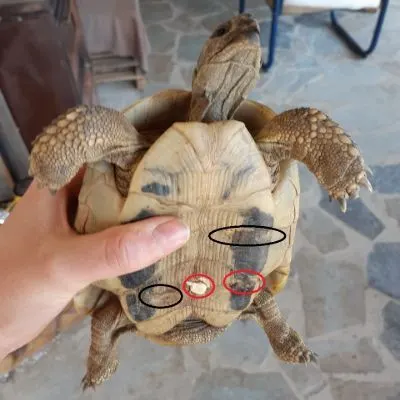
In tortoises and box turtles, shell rot may start on the plastron or between scutes. It can look like pale patches, orange or gray discoloration, round lesions, flaking, thickened scutes, soft depressions, or dirty areas that do not clean off normally.
Check the underside gently while keeping the turtle upright and supported. Do not turn the turtle upside down. Keep the check brief and calm, especially with stressed, weak, young, gravid, or sick animals.
Dirty damp substrate, excessive humidity for the species, poor drainage, old food, feces, shell injuries, poor nutrition, and incorrect temperatures can all contribute. For setup help, see box turtle setup, tortoise setup, and outdoor tortoise enclosure.
Softshell turtles and shell infections
Softshell turtles do not have hard keratin scutes like sliders or tortoises. They can still develop skin, shell, and wound infections. Their soft shell and skin are easy to injure with rough substrate, sharp decor, aggressive tankmates, poor water quality, and handling.
Do not treat a softshell turtle wound like normal scute shedding. White, gray, fuzzy, red, swollen, smelly, or open areas on a softshell turtle need reptile vet care and a water quality review. Softshell turtles also need species-specific care because many are sensitive to dirty water and abrasive setups.
If you keep a softshell turtle, review softshell turtle tank setup and remove rough or sharp items that can scrape the shell or plastron.
Shell Rot vs Shedding
Normal scute shedding can look alarming, especially in sliders, painted turtles, cooters, map turtles, and other aquatic turtles with scutes. Shell rot is different because it damages tissue and may smell, pit, soften, bleed, or spread.
| Feature | Normal scute shedding | Possible shell rot |
|---|---|---|
| Texture | Thin, clear, paper-like scute layer. | Soft, mushy, pitted, slimy, or rough damaged area. |
| Smell | No rotten or sour smell. | Bad smell may be present. |
| Color | Often translucent, shiny, or slightly reflective underwater. | White, gray, yellow, red, orange, brown, or black abnormal patches. |
| Pattern | Usually follows scute edges and lifts as a thin layer. | May form spots, holes, sores, pits, ulcers, or spreading lesions. |
| Shell beneath | Healthy hard shell under the shed layer. | Soft, bleeding, raw, smelly, pitted, or exposed damaged tissue. |
| What to do | Support basking, UVB, diet, and clean water. Do not peel scutes. | Call a reptile vet and correct the setup. |
Do not pull off scutes. If a scute is stuck, repeated shedding is abnormal, or tissue under the scute looks damaged, review turtle shedding and contact a reptile vet.
Soft Shell Spots and Metabolic Bone Disease
A soft shell area does not always mean the same thing. It may be normal hatchling flexibility, shell rot, injury, or metabolic bone disease. Location, texture, smell, color, age, diet, UVB, and the turtle’s behavior all matter.
| Shell issue | What it often looks like | What to do |
|---|---|---|
| Normal hatchling flexibility | A very young turtle may have a slightly flexible shell without bad smell, sores, pitting, or discoloration. | Confirm the species and age, then keep diet, calcium, UVB, heat, and water quality correct. |
| Metabolic bone disease | Shell may become generally soft, weak, deformed, or misshapen. The turtle may have weak limbs or poor growth. | Contact a reptile vet and review UVB, calcium, diet, and temperatures. |
| Shell rot soft spot | Localized mushy spot with white, gray, red, smelly, pitted, or damaged tissue. | Call a reptile vet promptly. |
| Shell injury | Crack, bite mark, scrape, puncture, burn, or exposed damaged tissue. | Use turtle first aid as a support guide and contact a reptile vet. |
Metabolic bone disease is not shell rot, but both can appear as shell problems. The Merck Veterinary Manual explains that metabolic bone disease in reptiles can result from poor diet, vitamin D3 deficiency, lack of UVB, and inadequate thermal provision. Read metabolic bone disease in turtles if the whole shell is soft, growth is abnormal, or the turtle seems weak.
What Causes Shell Rot?
Shell rot usually develops when shell damage, moisture, microbes, and poor husbandry overlap. It can also follow trauma, bites, burns, retained scutes, or chronic stress.
| Risk factor | How it raises risk | What to check |
|---|---|---|
| Dirty water | Waste and bacteria irritate shell and skin. | Test ammonia, nitrite, nitrate, and pH. Improve filtration and water changes. |
| No dry basking area | The shell stays wet and cannot dry fully. | Check dock size, ramp access, heat, and stability. |
| Damp tortoise or box turtle substrate | The plastron stays dirty or wet for long periods. | Check humidity, drainage, substrate depth, and cleaning schedule. |
| Sharp decor or rough substrate | Small injuries can become infected. | Remove sharp rocks, rough basking surfaces, broken decor, and abrasive substrate. |
| Bites or tankmate bullying | Shell wounds can become infected. | Separate aggressive turtles and check for injuries. |
| Burns | Heat injuries can damage shell tissue. | Check bulb distance, fixture security, and basking surface temperature. |
| Poor UVB, heat, or diet | Weak shell and immune function can slow recovery. | Review UVB bulbs, basking, water temperature, calcium, and diet. |
| Chronic stress | Stress can weaken appetite, behavior, and immune response. | Review handling, hiding areas, tankmates, noise, and enclosure size. |
Do not collect a wild turtle or tortoise for a home enclosure. Wild turtles may be protected, may carry parasites or infections, and may not survive captivity. If you find an injured wild turtle, contact a licensed wildlife rehabilitator or local wildlife authority.
What to Do Right Now
These steps are supportive measures while you arrange reptile veterinary care. They are not a substitute for diagnosis, culture, pain relief, debridement, antibiotics, antifungal care, or other treatment a vet may provide.
| Step | How to do it safely | Why it helps |
|---|---|---|
| Photograph the shell | Take clear photos from the same angle under good light. | Photos help you and your vet track changes. |
| Move to a clean safe enclosure | Use clean water or clean substrate appropriate for the species. | Dirty housing can worsen infection risk. |
| Improve water quality or substrate hygiene | Test water, do partial water changes, remove waste, and replace dirty bedding. | Clean conditions support recovery and prevent repeat irritation. |
| Provide correct basking and UVB | Make sure the animal can choose safe warm and cool zones. | Heat and UVB support normal reptile body function. |
| Remove hazards | Remove sharp decor, rough surfaces, unstable docks, and aggressive tankmates. | Fresh injuries can become infected. |
| Keep hydration safe | Do not keep aquatic turtles dry for long periods without vet guidance. | Aquatic turtles need hydration and species-appropriate water access. |
| Call a reptile vet | Describe the lesion, send photos if asked, and schedule an exam. | Shell rot can be deeper than it looks from the surface. |
Keep handling calm and brief. Wash your hands after touching the turtle, enclosure water, substrate, tools, or cleaning supplies. See turtles and Salmonella for human safety guidance.
What Not to Do
A shell lesion can be deeper than it looks. Avoid home procedures that can damage living tissue or delay care.
| Do not do this | Why it is risky | Safer choice |
|---|---|---|
| Do not scrape or dig into the shell. | You can injure living tissue and spread infection. | Let a reptile vet decide whether debridement is needed. |
| Do not peel scutes. | Forced peeling can expose damaged tissue and cause pain. | Support normal shedding with correct basking, UVB, diet, and water quality. |
| Do not cut away damaged tissue. | This is a medical procedure. | Seek veterinary care. |
| Do not use hydrogen peroxide repeatedly. | Repeated use can irritate tissue and may slow healing. | Ask a reptile vet which cleaning product is appropriate. |
| Do not apply random antibiotic or antifungal products. | Wrong products can irritate tissue or hide worsening disease. | Use medications only as directed by a reptile veterinarian. |
| Do not keep an aquatic turtle dry for long periods without guidance. | Aquatic turtles can dehydrate, overheat, or become stressed. | Ask a vet about safe dry holding and hydration if needed. |
| Do not return a sick turtle to dirty water or damp bedding. | Dirty conditions can restart the problem. | Correct the enclosure before the turtle returns. |
Veterinary Diagnosis and Treatment
A reptile veterinarian may examine the shell, check body condition, assess hydration, evaluate appetite and activity, and look for deeper infection or systemic illness. Depending on severity, the vet may recommend cytology, culture, biopsy, radiographs, blood work, pain relief, cleaning under veterinary supervision, debridement, topical medication, systemic antibiotics, antifungal medication, fluid support, or hospitalization.
Merck notes that SCUD lesions in aquatic turtles can include pitted scutes, scute sloughing, purulent discharge, lethargy, anorexia, and shell or skin hemorrhages. Merck also notes that mixed infections can occur and that biopsy may be needed to identify deeper causative agents.
Do not copy prescription treatment from the internet. Silver sulfadiazine, antibiotics, antifungals, pain relief, anesthetic debridement, and systemic medication should be used only under veterinary direction.
How to Prevent Shell Rot in Aquatic Turtles
Aquatic shell rot prevention depends on clean water, a dry basking area, stable temperatures, UVB, safe decor, and enough space. Red-eared sliders, painted turtles, cooters, map turtles, musk turtles, mud turtles, and diamondback terrapins all need species-specific setups.
| Prevention step | What to do | Helpful AllTurtles guide |
|---|---|---|
| Keep water clean | Use a strong filter, test water, remove waste, and do regular water changes. | Best filter for turtle tank |
| Clean the tank safely | Remove leftover food and waste before it breaks down. | How to clean a turtle tank |
| Provide a fully dry dock | The turtle should dry the carapace and plastron completely. | DIY turtle basking area |
| Use correct UVB and heat | Place heat and UVB over the basking area with safe distance. | Best UVB bulbs for turtles |
| Remove sharp decor | Use smooth rocks, safe wood, and stable hides. | Turtle tank setup |
| Separate aggressive tankmates | Prevent bites, stacking, and blocked basking access. | Aggressive turtles |
| Choose enough space | Crowding raises stress and water quality problems. | Turtle tank size calculator |

How to Prevent Shell Rot in Tortoises and Box Turtles
Tortoises and box turtles are not aquatic turtles. They need species-specific humidity, clean substrate, dry resting areas, safe soaking water, correct temperatures, UVB, and a balanced diet. Too much dampness against the plastron can raise shell rot risk, but too little humidity can harm some species. Match the setup to the species.
| Prevention step | What to do | Helpful AllTurtles guide |
|---|---|---|
| Keep substrate clean | Remove feces, old food, and wet bedding quickly. | Tortoise setup |
| Balance humidity | Use humidity that fits the species and life stage. | Box turtle setup |
| Use safe soaking water | Provide a shallow dish that is easy to enter and exit. | Tortoise water |
| Check the plastron | Lift and support the turtle upright for brief checks. | Turtle shell problems |
| Use a food tile or dish | Keep food away from dirty substrate. | What do box turtles eat |
| Provide correct UVB and heat | Let the animal choose warm, cool, dry, and sheltered areas. | Best heat lamps for turtles |

Water Quality, Basking, UVB, and Diet
Shell health is part of the whole enclosure. A turtle with dirty water, no dry basking access, poor UVB, wrong temperatures, or poor nutrition may be more vulnerable to shell problems and slower recovery.
Aquatic turtles need a basking area where they can climb completely out of the water. They also need clean water, correct water depth, a safe heater if needed, UVB, and a secure heat source. Review turtle tank setup, turtle basking, and how to keep a turtle tank clean when shell rot appears.
Diet also matters. Poor calcium balance, poor vitamin D3 support, lack of UVB, and incorrect temperatures can affect shell and bone development. Read vitamins and minerals for turtles and metabolic bone disease in turtles if the shell is soft or deformed.
Baby Turtles and Soft Shell Spots
Very young turtles can have a little shell flexibility while they are growing. That should not be confused with shell rot. Visible white, gray, red, smelly, mushy, pitted, bleeding, or spreading lesions are not normal.
Baby turtles can decline quickly because they are small. They also need correct UVB, heat, calcium, water quality, diet, hydration, and a safe enclosure. If a baby turtle has a soft shell, weak limbs, poor appetite, swollen eyes, or shell lesions, contact a reptile vet promptly.
Useful care guides include baby turtle care, what do baby turtles eat, and best cuttlebone for turtles.
When to see a reptile vet
See a reptile veterinarian for suspected shell rot. Go urgently if the shell is soft, smelly, red, deep, spreading, bleeding, painful, exposing bone, or paired with lethargy, not eating, swollen eyes, bubbles from the nose, wheezing, uneven floating, weight loss, weakness, diarrhea, or a bite, burn, crack, or puncture wound.
Shell infections can extend deeper than the surface. A vet can check whether the shell problem is infection, retained scutes, injury, mineral buildup, metabolic bone disease, fungal disease, bacterial disease, parasite involvement, or another condition.

Use this tool to find the closest All Turtles first aid guide for the symptom you are seeing.
Find the Right Turtle First Aid Guide
Search symptoms such as shell crack, bubbles, swollen eyes, no poop, not eating, wound, bite, or prolapse.
This tool helps you find AllTurtles guides. It is not a diagnosis. Contact a reptile veterinarian for urgent symptoms, injuries, or any turtle that is getting worse.
Call a reptile veterinarian or wildlife rehabilitator now for major bleeding, cracked shell, dog bite, trouble breathing, drowning, prolapse, severe weakness, swollen eyes with not eating, open-mouth breathing, or a turtle that was hit by a car.
The tool can help you choose a care guide, but it does not replace a reptile veterinarian for shell rot, shell wounds, breathing trouble, severe lethargy, swollen eyes, or appetite loss.
Helpful health guides include turtle first aid, turtle shell problems, turtle shell repair, cracked turtle shell, turtle fungus, turtle respiratory infections, turtle not eating, turtle stress signs, turtle swollen eyes and vitamin A deficiencies, and sick turtle.
Shell Rot FAQ
What is shell rot?
Shell rot is a shell infection in turtles and tortoises. It is also called ulcerative shell disease. It can involve bacteria, fungi, parasites, or mixed infections and may damage deeper shell layers if not treated.
What are the signs of shell rot?
Shell rot signs can include white, gray, yellow, red, brown, or black shell patches, pitting, soft spots, bad smell, loose scutes, red sores, bleeding, mushy texture, shell ulcers, or spreading damaged areas.
How do I tell shell rot from normal shedding?
Normal shedding usually comes off as thin, clear, paper-like scute layers with healthy hard shell underneath. Shell rot may smell bad, feel soft, look pitted, bleed, expose damaged tissue, or spread beyond normal scute edges.
Can shell rot be treated at home?
Suspected shell rot should be evaluated by a reptile veterinarian. Safe setup improvements can help, but deep, smelly, soft, red, spreading, bleeding, or painful shell lesions need veterinary diagnosis and treatment.
What causes shell rot in turtles?
Common risk factors include dirty water, damp substrate, shell injuries, bites, burns, sharp decor, poor basking access, inadequate UVB, incorrect temperatures, poor diet, chronic stress, and poor enclosure hygiene.
Can tortoises and box turtles get shell rot?
Yes. Tortoises and box turtles can develop shell rot, often on the plastron or between scutes when substrate is damp, dirty, or abrasive. They need species-specific humidity, clean substrate, safe heat, UVB, and regular shell checks.
Can softshell turtles get shell rot?
Softshell turtles do not have hard scutes, but they can still develop skin, shell, and wound infections. White, gray, fuzzy, red, swollen, smelly, or open areas on a softshell turtle need reptile vet care.
When should I see a vet for shell rot?
See a reptile vet for suspected shell rot. Go urgently if the shell is soft, smelly, red, deep, spreading, bleeding, exposing bone, or paired with not eating, lethargy, swollen eyes, bubbles from the nose, wheezing, weakness, or weight loss.
Conclusion
Shell rot is a serious shell infection that can affect aquatic turtles, box turtles, tortoises, and softshell turtles. Mild-looking patches can hide deeper problems, so suspected shell rot deserves a reptile vet check.
The best prevention is species-specific husbandry. Keep aquatic turtle water clean, provide a fully dry basking area, use correct UVB and heat, remove sharp decor, and prevent bites. Keep tortoise and box turtle substrate clean, manage humidity for the species, provide safe heat and UVB, and check the plastron regularly.
Do not scrape, peel, cut, or medicate shell lesions at home. Photograph the shell, correct the setup, keep the animal hydrated and warm within its safe range, and contact a reptile veterinarian for diagnosis and treatment.
Sources
- VCA Animal Hospitals, Common Diseases of Aquatic Turtles
- VCA Animal Hospitals, Housing Aquatic Turtles
- Merck Veterinary Manual, Bacterial Diseases of Reptiles
- MSD Veterinary Manual, Septicemic Cutaneous Ulcerative Disease, Slider Turtle
- MSD Veterinary Manual, Nutritional, Metabolic, and Endocrine Diseases of Reptiles
- Vet Times, Shell Rot, A Clinical Approach and Treatment
- ReptiFiles, Red-Eared Slider Shell Rot