
Turtles are fascinating creatures best known for their hard shells. They live on every continent except Antarctica, with species thriving in oceans, rivers, and on land. Because many turtles spend time in water, people often wonder: are turtles reptiles or amphibians?
Yes, turtles are reptiles. All turtles (including tortoises and terrapins) belong to the reptile class Reptilia in the order Testudines. Like other reptiles, turtles are cold-blooded ectotherms with dry, scaly bodies, they lay shelled eggs on land, and they breathe air with lungs.
In other words, a turtle has much more in common with a snake or lizard than with a frog or salamander. In this article, we’ll explain why turtles are reptiles (and not amphibians), clear up some myths about water-dwelling turtles, and answer popular questions about our shelled friends. Let’s dive in!
Table of Contents
So, Are Turtles Reptiles? Short Answer

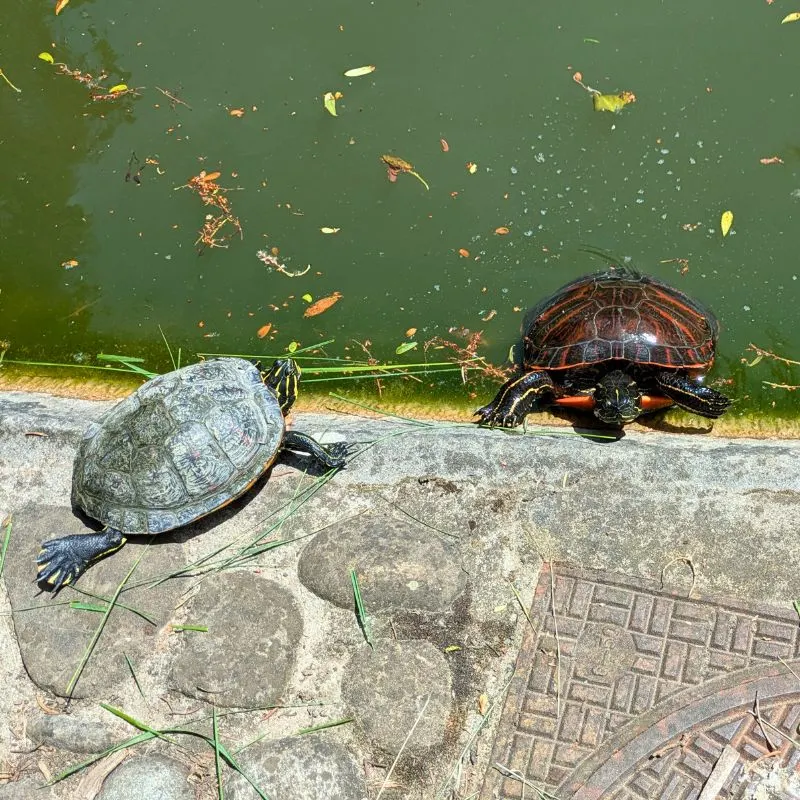
Yes, turtles are reptiles. Every turtle, tortoise, and terrapin is a reptile. Scientifically, all belong to the class Reptilia and order Testudines (often called the chelonians). Turtles share all the key traits of reptiles: they are cold-blooded (ectothermic), have dry, scaly skin (and shells with scutes), lay amniotic eggs on land, and breathe air through lungs from the moment they hatch. These traits make turtles far more similar to snakes, lizards, and crocodiles than to amphibians like frogs or salamanders. In short, a turtle is a bona fide reptile with a built-in shell, not an amphibian.
Why Turtles Are Reptiles
Turtles check all the boxes for being reptiles. Biologists usually cite four main characteristics that set reptiles apart from other animals. Turtles meet each one of these criteria:
- Amniotic eggs laid on land: Reptile eggs have a protective membrane and often a leathery or hard shell, allowing them to be laid on land without drying out.
- Lungs (no gills at any stage): Reptiles breathe air with lungs throughout their lives; even aquatic turtles must come up for air.
- Dry, scaly skin (with keratin): Reptiles have skin covered in scales or bony scutes made of keratin (the same protein in fingernails), which prevents excessive water loss.
- Ectothermic (“cold-blooded”): Reptiles rely on external heat sources to regulate body temperature, rather than generating their own internal body heat.
Below, we break down each of these reptile traits and how turtles exemplify them:
Amniotic Eggs


Turtles are amniotes, meaning they lay eggs with a special membrane (amnion) and usually a leathery or hard shell. In simple terms, a reptile egg carries its own little “water supply” inside it, so it doesn’t dry out on land. All turtles lay shelled eggs on land (even sea turtles haul themselves onto beaches to bury their eggs), and these amniotic eggs are a key reason turtles are reptiles rather than amphibians.
By contrast, amphibian eggs are soft, jelly-like, and must be laid in water or very damp places so they won’t dry up. A frog’s eggs, for example, typically float in clumps in a pond. Because reptile eggs have protective shells and internal membranes, turtle embryos develop safely on land and hatch into miniature versions of the adults. Amphibian young, on the other hand, hatch as larvae (like tadpoles) that live in water and later undergo metamorphosis to become adults. A baby turtle digs out of its nest ready to walk, swim, and breathe air from day one—very different from a tadpole’s journey to frog-hood.
Lungs, Not Gills
Unlike fish or amphibians, turtles never breathe using gills. From the moment it hatches, a turtle must breathe air with lungs. Turtles cannot get oxygen through their skin—their bodies are covered in protective scales and a hard shell, which means no “skin breathing” for turtles (many amphibians can absorb oxygen through their thin skin, but reptiles cannot). Because of this, even aquatic turtles like sliders or sea turtles must regularly surface for air.
Some turtles have clever tricks to stay underwater longer—such as absorbing a bit of oxygen through their throat or cloaca (a rear opening) when resting. This ability, called cloacal respiration, lets species like the Fitzroy River turtle spend extended periods underwater. However, they still have to surface for real air eventually. No turtle can spend its entire life underwater without breathing. In short, having lungs for breathing air is a defining reptile trait that all turtles share, whereas amphibians start life with gills and only later develop lungs.
Scales and Scutes of Keratin

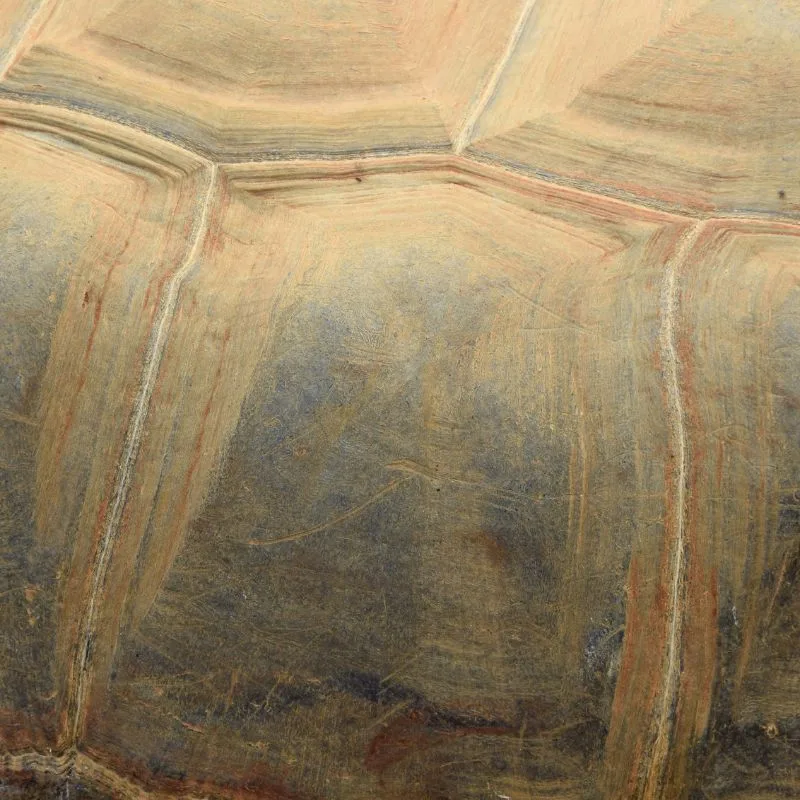
Turtles might not be as obviously scaly as snakes, but they do have scales. Look closely at a turtle’s legs, tail, and head and you’ll see small, rough scales. More importantly, a turtle’s shell is covered by hard plates called scutes, made of keratin (the same material as our hair and nails). These scutes form a tough, waterproof covering over the bony shell—essentially a built-in suit of armor. Dry, keratinized skin is a classic reptile adaptation that prevents water loss.
Amphibians, in contrast, have no scales or scutes at all. Their skin is smooth, moist, and porous. A frog’s thin skin must stay damp (and even allows the frog to breathe through it), but this means amphibians can dry out quickly and generally cannot live in very dry environments. Reptile scales solve that problem: a turtle’s scaly, scuted skin allows it to live in deserts, oceans, and other dry places without dehydrating. So the shiny plates on a turtle’s shell are scutes—tough reptile scales—proving that turtles wear authentic reptilian armor.
Ectothermy (Cold-Blooded)
Turtles are “cold-blooded,” more accurately described as ectothermic. This means they rely on external heat sources (like sunlight or warm water) to regulate their body temperature. A turtle can’t shiver or sweat to warm up or cool down the way mammals and birds do (those animals are warm-blooded, or endothermic). Instead, a turtle may bask in the sun to raise its body temperature or seek shade or water to cool off. The word “ectotherm” comes from Greek: “ecto” meaning outside, and “therm” meaning heat.
Being cold-blooded isn’t a bad thing—it’s just a different strategy. In fact, ectothermic animals like turtles can survive on far less food than warm-blooded animals of similar size because they don’t burn calories to produce body heat. A snake or turtle can eat occasionally and be fine, whereas a similar-sized mammal must eat much more often to fuel its metabolism. (This is why reptiles can sometimes go weeks without eating.) Amphibians are also ectothermic, so this trait isn’t unique to reptiles, but it’s a hallmark of the group. When we say turtles are cold-blooded reptiles, we mean they depend on the environment for heat and energy—warming up in the sun and slowing down when it’s cool.
Turtles vs. Amphibians
At first glance, turtles might seem a bit like amphibians—after all, many turtles are excellent swimmers and live around ponds or wetlands just like frogs and salamanders. It’s easy to get confused by the shared habitat, but turtles and amphibians are very different once you look closer. The comparison table below highlights the major differences between turtles (reptiles) and amphibians in plain language:
| Trait | Turtles (Reptiles) | Amphibians |
|---|---|---|
| Skin | Dry, with scales or scutes; resists water loss | Smooth, moist, porous skin (no scales); dries out easily |
| Eggs | Leathery or hard-shelled eggs with amniotic membrane, laid on land | Soft, jelly-like eggs (no shell), laid in water or very wet places |
| Breathing | Always with lungs (from hatchling to adult) | Gills when young (tadpoles), then lungs as adults; can also breathe through skin |
| Life Cycle | No metamorphosis: hatchlings look like tiny adults | Metamorphosis: larvae (e.g. tadpoles) transform into adults |
| Temperature | Ectothermic (“cold-blooded”); relies on sun/shade for warmth | Ectothermic (“cold-blooded”) as well (both groups rely on external heat) |
| Habitat Needs | Water not needed for reproduction (eggs develop on land) | Water required for reproduction (eggs & young need water habitat) |
In summary, turtles are land-adapted reptiles with hard shells, dry scales, and self-contained eggs, whereas amphibians have soft moist skin, need water to reproduce, and usually undergo a dramatic change from water-babies to land adults. One big reason people confuse the two is the water issue—some turtles spend lots of time in water, but that doesn’t make them amphibians. Unlike an amphibian, a turtle never needs to start its life in water. Every baby turtle hatches from an egg on land and breathes air from day one. So while a frog and a turtle might share a pond, the frog is an amphibian and the turtle is firmly on Team Reptile.
Turtles vs. Tortoises vs. Terrapins
People often use the words “turtle,” “tortoise,” and “terrapin” to describe different kinds of shelled reptiles. Scientifically speaking, all of them are turtles—they all belong to the order Testudines and are reptiles with shells. However, in everyday language these terms usually refer to where the turtle lives:

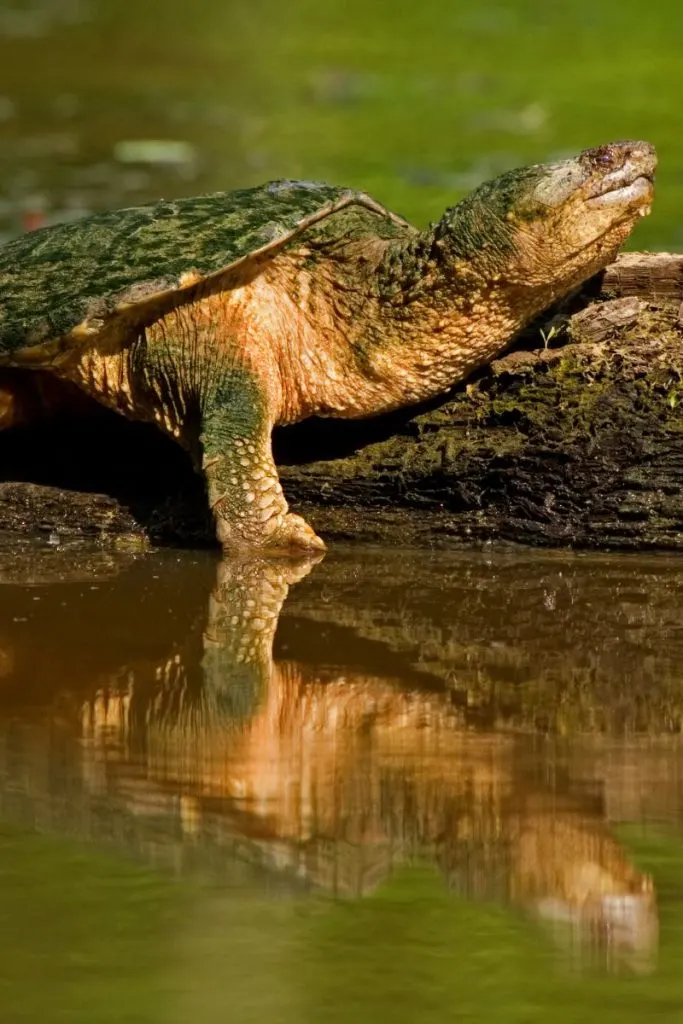
Turtle: In general usage, “turtle” can refer to any member of the turtle family (any chelonian). However, we often use “turtle” to mean those species that spend a lot of time in water. For example, sea turtles are ocean-dwelling turtles, and many freshwater turtles live in ponds, lakes, and rivers. These turtles usually have streamlined shells and webbed feet or flippers to help them swim.

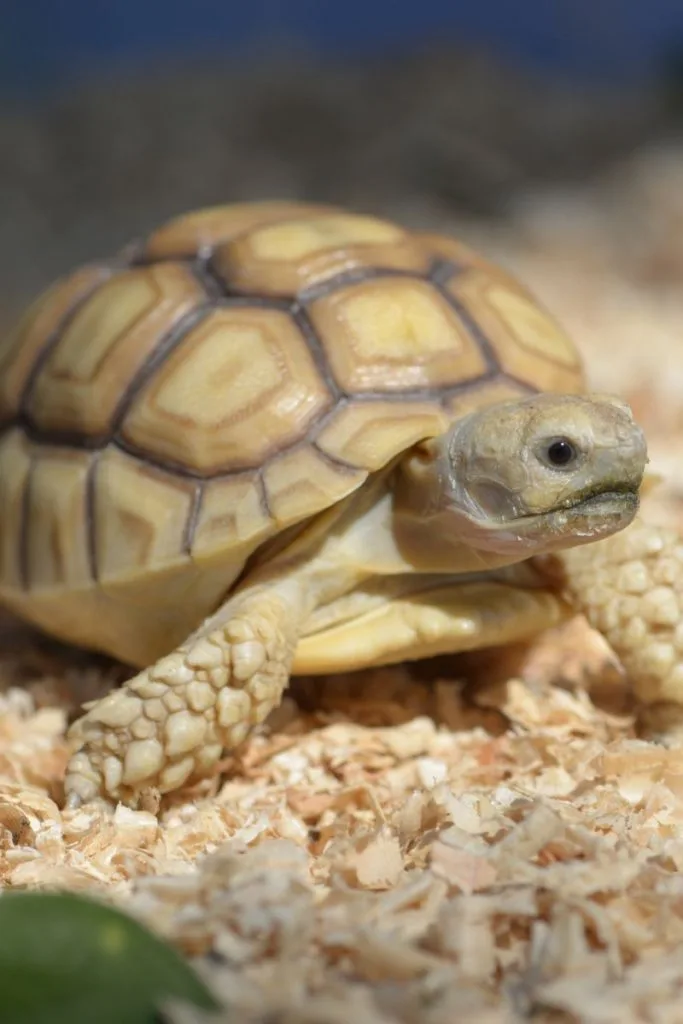
Tortoise: A tortoise is essentially a land-dwelling turtle. Tortoises (like desert tortoises or Galápagos tortoises) live primarily on land and are not good swimmers. They have high, domed shells and thick, stumpy “elephant” legs for walking on land. Tortoises generally avoid deep water (they can easily drown in a pool). If you see a turtle lumbering around in a dry grassland or desert, it’s a tortoise. (Fun fact: all tortoises are turtles scientifically, but not all turtles are tortoises.)


Terrapin: “Terrapin” is a term used mostly in British English and some parts of the U.S. for certain small turtles that live in fresh or brackish water (water that’s a mix of fresh and salt). For instance, the diamondback terrapin (in the U.S.) lives in coastal marshes with brackish water. Terrapins are basically a subset of turtles. The word isn’t used everywhere, but where it is used, it generally means an aquatic turtle that splits its time between water and land (often marshes or swamps). If someone calls their pet turtle a terrapin, they likely mean a small water-loving turtle.
Bottom line: All of these creatures—turtles, tortoises, and terrapins—are closely related reptiles with shells. We mostly distinguish them by habitat. “Turtle” is the broad term (water or land), “tortoise” means a land specialist, and “terrapin” usually refers to a small turtle that likes swamps or brackish water. No matter the name, they’re all chelonians and all part of the turtle family.
Marine Life Myth-Busters
Turtles often straddle the line between land and water, which has led to some common misunderstandings. Let’s bust a few pervasive myths about turtles (especially those that live in or around water):
Myth: “If a turtle lives in water, it’s an amphibian.”
Fact: Even a fully aquatic turtle (like a sea turtle) is still 100% reptile. Being amphibious (comfortable both in water and on land) is not the same as being an amphibian (a specific class of animal). Reptiles and amphibians are completely separate groups.
A green sea turtle gliding in the ocean is as much a reptile as a desert tortoise plodding on land. What makes a turtle a reptile is its anatomy and life cycle (lungs, scales, shelled eggs on land), not the fact that it swims. Remember, every turtle hatches from an egg on land and breathes air from the start—nothing like how amphibians develop.
Myth: “Turtles can breathe underwater like fish.”
Fact: No—turtles do not have gills, so they cannot extract oxygen from water like fish do. Every turtle has lungs and must come up for air regularly or it will drown. Aquatic turtles are great at holding their breath; for example, a sea turtle can often stay underwater for several hours while resting, and some freshwater turtles can hibernate underwater for months by slowing their metabolism.
Certain turtles can absorb a bit of oxygen through their throat or rear end (cloacal respiration) when submerged, but this is just a temporary trick. Eventually, all turtles must surface to take a real breath of air. This is why pet turtles need access to the surface, and why you’ll see wild turtles poking their noses above water frequently.
Myth: “Turtles lay their eggs in water since they live in water.”
Fact: Turtles never lay eggs in water. No matter how aquatic a turtle species is, the female always crawls onto land to nest. If turtle eggs were laid in water, the embryos would suffocate. Sea turtles famously haul out on sandy beaches to dig nests above the high tide line.
Freshwater turtles seek out riverbanks, marshy spots, or forest floors to bury their eggs in dirt or sand. This is a crucial difference between reptiles and amphibians: reptiles (like turtles) don’t need open water to reproduce, whereas amphibians must lay eggs in water. So those jelly-like eggs you see floating in a pond belong to frogs or other amphibians—not turtles.
Myth: “A turtle’s shell is like a snail shell or a suit of armor it wears.”
Fact: A turtle’s shell is actually part of its skeleton—it’s bone, not just an outer armor. The top part (carapace) and bottom part (plastron) of a turtle’s shell are made of fused bones (including the ribs and backbone) covered by keratin scutes. Unlike a hermit crab or snail, a turtle cannot walk out of its shell; the shell grows with the turtle and contains its spine and ribcage inside.
In other words, a turtle’s shell is living bone, not a discardable armor plate. The shell has nerves and blood supply, so the turtle can feel pressure on it and a cracked shell can slowly heal. It is armor—protecting the turtle from predators and injury—but it’s a permanent, living armor attached to the turtle’s body. This unique design makes turtles one-of-a-kind among animals.
Conservation Snapshot
Turtles have been around since the time of the earliest dinosaurs, but today many turtle species are facing serious challenges. Here’s a quick snapshot of turtle conservation status and issues worldwide:
Diversity: There are roughly 360 living species of turtles, tortoises, and terrapins. They range in size from tiny 10 cm / 4 in mud turtles to giant tortoises over 120 cm / 4 ft long (and some sea turtles are even larger, with leatherback sea turtles reaching about 2 m / 7 ft). Turtles live on every continent except Antarctica, in habitats ranging from deserts to oceans.
Threat Level: Over half of these turtle species are threatened with extinction in the wild. In fact, turtles and tortoises as a group are among the most endangered vertebrates on Earth. Researchers estimate that about 51–56% of turtle species are threatened or already extinct in the wild—a higher percentage than for most groups of mammals, birds, or even amphibians.
Sea Turtles: All seven species of sea turtles are in trouble. For example, the Hawksbill sea turtle (Eretmochelys imbricata) and Kemp’s ridley sea turtle (Lepidochelys kempii) are listed as Critically Endangered globally. Even the more common sea turtles, like green turtles and loggerheads, are classified as Threatened (many populations are Endangered or Vulnerable on the IUCN Red List).
Conservation efforts have helped some sea turtle populations—for instance, certain green turtle nesting beaches are seeing more hatchlings thanks to protection—but all sea turtles still face significant threats and need continued protection.
Main Threats: The biggest threats to turtles include habitat loss and degradation (for example, development of beaches and wetlands destroys nesting and feeding areas), pollution (especially plastic in oceans, which turtles can ingest or become entangled in), climate change (warming temperatures can skew hatchling sex ratios and alter habitats, and stronger storms can destroy nests), and overexploitation by humans.
Many turtles are illegally collected for the pet trade or hunted for their meat and shells. On land, tortoises often suffer from poaching and fragmented habitats. In water, freshwater turtles and sea turtles frequently drown as bycatch in fishing gear.
Conservation Efforts: Around the world, people are working hard to save turtles. Key measures include protecting nesting sites (some beaches are patrolled during nesting season and nests are relocated or guarded), establishing wildlife refuges and marine protected areas, and modifying fishing practices to reduce accidental turtle catch (for example, using turtle excluder devices in shrimp nets).
There are also “head-start” programs where hatchling turtles are raised in captivity and released when they’re less vulnerable to predators. International agreements like CITES ban the trade of endangered turtles and tortoises, and many countries have laws protecting native turtle species. Public awareness campaigns (such as World Turtle Day each May) encourage people to appreciate turtles, reduce plastic waste, and refrain from taking wild turtles as pets. Thanks to these efforts, some turtle populations are stabilizing or even recovering—but many others remain at risk and will need ongoing help.
FAQs
Are turtles dinosaurs?
No, turtles are not dinosaurs—but they are distant relatives. Both turtles and dinosaurs belong to the broader reptile family, so they share ancient ancestry, but they sit on separate branches of the reptile family tree. Turtles first appeared over 200 million years ago, around the same time as some of the earliest dinosaurs. These shelled reptiles coexisted with dinosaurs through the Mesozoic Era, and unlike the non-avian dinosaurs, turtles survived the mass extinction 65 million years ago.
When someone asks if turtles are “living dinosaurs,” the answer is that turtles and dinosaurs are distinct groups of reptiles. (The only living dinosaurs today are birds, which evolved from one branch of the dinosaur lineage.) Turtles are an ancient lineage of reptiles that lived alongside the dinosaurs and are still with us today, but they are not classified as dinosaurs themselves.
Can turtles live entirely underwater?
No – turtles cannot live entirely underwater because they need to breathe air. Every species of turtle has lungs (not gills), so even the most aquatic turtles must come up to the surface regularly to get oxygen.
That said, turtles are experts at holding their breath. For example, a sea turtle can often stay submerged for 4 to 7 hours when resting. Some freshwater turtles can even hibernate underwater for several months by slowing their metabolism way down (during this state, they may absorb a small amount of oxygen from the water through their skin or cloaca). But even these turtles eventually have to surface to take a real breath. No turtle spends its entire life underwater from birth to death.
It’s also worth noting that mother turtles of all species must leave the water to lay eggs on land. So while aquatic turtles are very at home in the water, they’re never completely free from the need to breathe air.
Do turtles lay eggs in water?
Definitely not. Turtles always lay their eggs on land, never underwater. This is one of the key distinctions between reptiles and amphibians. A turtle’s eggs must exchange air through the shell, so if they were underwater the embryos would drown or suffocate. Sea turtles famously come ashore on beaches to dig nests in the sand above the high tide line.
Freshwater turtles will climb onto riverbanks, lakeshores, or forest floors to bury their eggs in soil. Even turtles that spend almost all their time in water will leave the water to nest. If you ever find a turtle egg, it will be leathery or hard-shelled and buried on land. (Amphibians are the ones that lay squishy, jelly-like eggs in water.) In short, no baby turtle hatches in a pond or ocean—all baby turtles begin life on solid ground.
Are turtle shells bone or “armor”?
Both! A turtle’s shell is made of bone (and is an integral part of the turtle’s skeleton), and it functions as a protective armor. The top shell (carapace) and bottom shell (plastron) are constructed from bony plates—these include the turtle’s fused ribs and backbone, which expanded and fused to form the shell.
These bones are covered by hard keratin scutes on the outside, giving the shell its armored surface. The result is that a turtle’s shell is like a suit of armor made of living bone and horn. Importantly, the shell is not something the turtle “wears”—it’s something the turtle is.
The shell has nerves and a blood supply, so a turtle can feel pressure or pain through it, and the shell grows with the turtle throughout its life. The shell can even heal if it gets a crack (though slowly). So when you think of a turtle’s shell, imagine a combination of a ribcage, spine, and armor all fused into one—nature’s ingenious way of protecting the turtle.
What’s the difference between reptiles and amphibians in plain English?
In plain English, reptiles (like turtles, snakes, and lizards) are land-oriented animals with dry, scaly skin and hard-shelled eggs laid on land, whereas amphibians (like frogs, toads, and salamanders) are dual-life animals that need water for their early life stages and have moist, smooth skin.
For example, a reptile lays its eggs on land in a protective shell, and a baby reptile hatches looking like a miniature adult. An amphibian lays eggs in water with no shell, and the young hatch as aquatic larvae (tadpoles) that look nothing like the adults until they transform (metamorphose).
Reptiles breathe air with lungs from birth, while amphibians typically start out with gills and later develop lungs (and can also breathe through their damp skin). Also, reptiles have scales or bony plates that keep their bodies from drying out, whereas amphibians have delicate skin that must stay wet, so they usually live in or near water.
Both groups are cold-blooded vertebrates, but their lifestyles are very different. The easy way to remember: reptiles stay dry and breathe air their whole lives, while amphibians need water (at least when young) and go through a dramatic transformation from a water-baby to a land adult.
Sources
- Britannica Kids – “Turtle”. Encyclopedia Britannica entry (Kids version) confirming that turtles are reptiles (more than 350 species worldwide) and describing their shells, eggs laid on land, etc.
- Rutgers University (NJAES) 4-H – “What is the Difference Between Reptiles and Amphibians?”. Educational article (2019) detailing key differences: reptile skin is keratinized and waterproof; reptile eggs have shells and are laid on land, whereas amphibians have permeable skin and lay jelly-like eggs in water; reptiles do not undergo metamorphosis, amphibians do, etc.
- USGS / Rhodin et al. 2018 – “Global Conservation Status of Turtles and Tortoises”. Peer-reviewed analysis (Chelonian Conservation and Biology, 2018) of all 360 turtle and tortoise species worldwide. Found that ~51.9% are threatened (and 56.3% if projecting Data Deficient species):contentReference[oaicite:0]{index=0}:contentReference[oaicite:1]{index=1}, making Testudines one of the most endangered vertebrate orders.
- IUCN Marine Turtle Specialist Group (MTSG). Compilation of IUCN Red List assessments for sea turtles (via WIDECAST). Hawksbill and Kemp’s ridley sea turtles are classified as “Critically Endangered” globally:contentReference[oaicite:2]{index=2}; green and loggerhead sea turtles are “Endangered” or “Vulnerable”:contentReference[oaicite:3]{index=3}:contentReference[oaicite:4]{index=4}. All seven sea turtle species are under threat and require ongoing conservation efforts.
- NOAA Fisheries – Sea Turtle Overview. U.S. National Oceanic and Atmospheric Administration summary of sea turtle status and threats. All six sea turtle species found in U.S. waters are listed under the Endangered Species Act. Major threats include bycatch in fisheries, habitat loss (beach development), pollution (marine debris like plastics):contentReference[oaicite:5]{index=5}, and vessel strikes. Describes conservation measures such as turtle excluder devices and protected nesting beaches.