
Turtles breeding requires patience and probably an incubator to regulate the incubation process. Regardless of how long it takes, turtle breeding is a simple process as long as you have the needed information.
This article seeks to provide potential breeders as well as veteran breeders with the information needed to successfully breed turtles.
Table of Contents
Why Breed Turtles?
Captive-bred turtles make better pets as they are used to human contact. Also acquiring captive-bred turtles ensures you don’t negatively impact wild populations.
With a booming market for pet turtles, breeding turtles is good for wildlife and it is a lucrative venture.
How to Breed Turtles
Before You Get Started
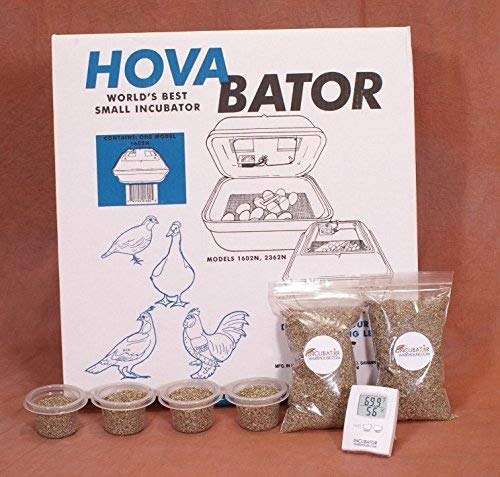
There are a few things you need from the start. These include an incubator such as the Hova-Bator Still Air Egg Incubator Kit or the GQF Electronic Thermostat Hova-Bator.
The number of eggs you want to incubate will determine the incubator size. You may also need nesting substrates such as peat moss, coco coir, vermiculite, or sphagnum moss if it doesn’t come with the incubator.
You also need extra containers to nest the eggs in and to house the turtles breaking out of their shells.
Identify the sex of the turtles


The first thing you need to do is ascertain the sex of your turtles. Sexual dimorphism differs from one turtle species to another.
As such, it is important to seek expert help or read up on the particular turtles you wish to breed.
For terrapins and other freshwater turtles, females are generally larger. Male turtles also tend to be more colorful and aggressive.
For box turtles, males are generally larger. Male sliders tend to have long claws on their front legs.
We have an in depth guide on sexing your turtle you can check out for more.
Know the age of the turtle
A turtle that hasn’t reached sexual maturity cannot breed. The age of sexual maturity differs from one species to another.
For freshwater turtles such as sliders, cooters, map turtles, musk turtles, and many others, males reach sexual maturity at age 3, while females reach sexual maturity at age 5.
Box turtles, on the other hand, all reach sexual maturity at age 5.
Also even if you acquire an adult turtle, wait for a year before breeding it.
Male to female ratio


When it comes to reptile breeding, it is advisable to have more females. For every 2 males, there should be about 5 females. The reasons for this include the following.
- Sexually aggressive males can bother females until the female’s health suffers. A higher female to male ratio ensures the females don’t suffer from too much attention from sexually motivated males.
- If there are few adult females, males would fight over the limited number of females. A higher female to male ratio ensures this doesn’t happen.
After mating, separate the sexes. This ensures the male turtles don’t keep boring the females.
Pre-mating Process
Cooling-Off Period
To increase the chances of success, it is important to cool your turtles before breeding. Essentially, the plan is to provide temperature patterns found in the wild.
Since the nesting season starts in March and gets in June, the cooling-off period needs to occur from January to February for freshwater turtles. For box turtles, the cooling-off period is from December to February.
- During the cooling period, the turtle is to be left alone. Although you should offer food, the turtle will probably eat none.
- For freshwater turtles/terrapins, the temperature of the habitat should be kept at 50 F to 60 F for a month and a half to 2 months (January and February).
- For box turtles, the temperature of the habitat should be kept at 50 F to 60 F for 2 months to 3 months (December to February).
- For turtles that are housed in an outdoor pond, the drop in temperature over winter will provide natural cooling (also known as hibernation).
After the Cooling-Off Period
After the cooling period, the temperatures within the habitat go back to normal. For freshwater turtles, this is an air temperature of 75 F to 60 F, a basking temperature of 85 F to 110 F, and a water temperature of 72 F to 75 F.
Feeding the turtle


If you are to breed a pair of turtles then their diet is of the utmost importance (especially the females). This diet is to ensure the female has more than enough calcium and vitamin D3 to produce healthy eggs.
Follow the dietary requirement of each turtle as according to its species.
- Offer freshwater turtles/terrapins bloodworms, snails, krill, crickets, feeder fish, crayfish, earthworms, ghost shrimp, romaine lettuce, hornwort, Anacharis, melon, water starwort, water lilies, vegetable scraps, frogbit, peas, water milfoil, tomatoes, water fern, water hyacinth, cooked sweet potatoes, duckweed, dandelion flowers & leaves, water lettuce, pondweed, and mulberry leaves. Also, offer commercially produced turtle diets.
- Offer box turtles the same foods as freshwater turtles but includes more green leafy vegetables.
- Offer turtles calcium supplements. The needed calcium and vitamin D can also be acquired through commercially produced turtle diets. Alternatively, you can place cuttlefish bone in the habitat. The turtle will nibble on it as needed.
In conclusion, just feed the turtle a well-rounded diet like you always do.
Mating Process


Creating a conducive environment
Place the males and females in the same enclosure. The enclosure has to be large enough for the turtles to roam freely. There needs to be an adequate nesting area where females can lay eggs.
- Provide an area with soft soil surrounded by rocks and logs so the female feels secure enough to lay and hide her eggs. The area should have about a foot of soft slightly moist soil and be sheltered.
- If you keep your turtles in an outdoor enclosure, the nesting area can be created within the enclosure. Otherwise, create the nesting area in a box that is easily accessible to the female turtles.
There isn’t much you can do to force the turtles to mate. It’s up to nature at this point.
Consider separating turtles of different species


Terrapins are generally comfortable living around terrapins of different species. However, if you plan on breeding several species of turtles, it may be best to separate them according to size.
- Delineate the enclosure into smaller compartments and keep the larger species in one compartment and smaller species in another. This helps curb violent behavior from larger turtles. Larger turtles can even kill smaller turtles.
After Mating
Turtles lay eggs in clutches. Each clutch can contain anywhere between a single egg to 10 eggs. Clutches are usually laid a few weeks apart. It may take the turtle a day or two to lay a clutch. You can find the eggs in the nesting area or nesting box.
Incubating the eggs
Once the gravid females lay the eggs, you need to incubate them. It is best to acquire an incubator for reptile eggs. The temperature needs to be kept at the right temperatures. (We will tackle this soon).
These thermometers come with thermometers so you can easily track the temperature within the incubator. As you may already know, the temperature within the incubator determines the sex of the turtle.
- The temperature within the incubator should be kept between 75 F and 85 F. As such, on hot days, move the incubator to a cool day.
- The inside of the incubator needs to be humid. As such the substrate used should be moist. Never place the eggs in the sun, as the heat from the sun can easily overheat and kill the unhatched babies.
Creating a nest for the eggs


The eggs need to be within a nest within the incubator. Some incubators come with containers within which you can nest the eggs. However, creating a nest is a simple process.
- A Rubbermaid food storage container can be used to create a nest. This container has a lid which is crucial as this helps control moisture levels. You can use any plastic container you can get your hands on as far as it can fit within the incubator. You can even use deli take-out containers.
- When you place the lid on the container do not do so tightly, you don’t want to move the eggs around too much as you open the container.
- Make holes in the container so that the eggs are well aerated.
- In the beginning, fit the lid loosely on the container. As the eggs are closer to hatching, you should fit the lid tighter so the hatchlings cannot move the lid.
Place damp bedding in the container. Substrates such as peat moss and coco coir are excellent as they retain moisture very well.
- I recommend a mix of 1 part sphagnum moss, 1 part vermiculite and 1 part peat moss. Alternatively, you can use just peat moss or coco coir, if you cannot find all three materials mentioned.
- Soak the mix in water and squeeze out excess water.
- You can find peat moss, sphagnum moss, vermiculite and coco coir at your local hardware and garden supply store. You can also order some online.
Caring for the incubated eggs
Find the eggs after the female lays them. When picking up the eggs don’t overturn them. Turning the eggs can drown the embryo.
- Make indentations in the bedding where you will place the eggs. When you place the egg in the impression, you can use a marker to mark the tops of the eggs so you know which way is up.
- Eggs may be stuck together when you pick them. If you can, gently separate them. Otherwise, leave them as they are.
- Place the nest with its lid inside the incubator.
Sex of the turtle
As already mentioned, the incubation temperature determines the sex of the turtle. Higher temperatures yield females while lower temperatures yield males.
Additionally, the higher the temperature, the quicker the eggs will hatch. However, avoid very high temperatures (90 F and above) as that can kill the embryo.
- Temperatures around 85 F (above 82 F) generally yield more females than males. To yield females, many keepers keep temperatures close to 88 F.
- Temperatures lower than 81 F (from 80 F to 75 F) generally yield more males than females.
Inspecting the eggs
Inspect the egg weekly for the first 8 weeks. Ensure the eggs and the substrate they are in should be moist but not moldy.
After 45 days, check the eggs every two days, then daily until they hatch. Keep the incubation time for the species in mind.
For instance, map turtle eggs incubate for 50 to 70 days, and mud turtle eggs take 50 to 90 days to incubate. It’s important to be patient and not rush things. Depending on the species, incubation takes 50 to 120 days.
As the turtle hatches, do not help it, the turtle uses an egg tooth to break out.
- If you see mold on the eggs, wipe it off with a cotton swab. Peat moss, vermiculite, sphagnum moss, and coco coir do not mold.
- Also, you need to discard bad eggs
especially after eggs start to hatch. An egg with dent can be fine. An egg with
a leaky bottom is spoilt. Similarly, a collapsed egg is bad. Once the clock
reaches 4 months, examine remaining eggs and discard bad eggs. After about 5
months, you need to dispose of any unhatched eggs.
Caring For the Hatchlings

Moving the hatchling
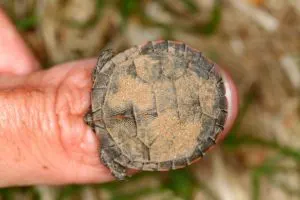
As the turtles hatch, move the hatchlings move them to their new home which is an enclosure with water and a dry patch as well as heating.
A turtle may take several days to completely break free of its shell. At this stage, you can move it to a container with moist paper towels outside the nest.
- Remove discarded bits of shells from the nest.
Feeding the hatchling


Now that the hatchling is out, you need to feed it. Follow the feeding regimen for the turtle species.
- Hatchlings need to be fed daily. Several commercial baby turtle formulas on the market can be fed to hatchlings. I recommend ReptoMin Baby Turtle Formula Sticks. This is designed specifically for baby turtles.
- Feed the turtle as much as it can eat within about 10 minutes. Remove any uneaten food. Some turtles can eat on land while others eat exclusively in water.
Common Questions
How long do turtles take to mate?
While the exact duration can vary greatly depending on the species and specific conditions, turtle mating can generally last anywhere from a few minutes to several hours. It’s important to note that successful mating involves multiple factors beyond just the duration of the act itself.
What time of year do turtles breed?
Turtles generally start their nesting season in March and continue until June. A “cooling-off period” in January and February for freshwater turtles, or from December to February for box turtles, can increase breeding success.
How do I breed my turtles?
To breed turtles, first ensure you have turtles of appropriate sex and age, and maintain a good male to female ratio.
Provide a large enough enclosure with a nesting area and a conducive environment.
After a cooling-off period that replicates natural temperature patterns, feed your turtles a well-rounded diet and let nature take its course.
Post-mating, eggs should be carefully incubated at a temperature that will determine their sex, and hatchlings should be carefully cared for.
Conclusion
Regardless of how well you care for the parent turtles and the eggs, not all the eggs will make it. Additionally, not all the hatchlings will make it past the first year.
This is natural and you shouldn’t be too worried. Additionally, over several successful breeding seasons, you will get better at the process.
I also recommend that you keep a journal in which you record the turtles’ breeding timeline.
This accumulation of information is useful for future breeding projects.
If you have any questions, or information on how to breed turtles, kindly leave them. We welcome all contributions.