
Most tortoises eat grasses, weeds, hay, flowers, leaves, and other fibrous plants. A good tortoise diet depends on the species, age, health, UVB exposure, temperature, hydration, and enclosure setup.
This guide explains what tortoises eat, which foods are safe, which foods should be limited or avoided, and how diets differ for sulcata, Russian, Indian star, marginated, Egyptian, pancake, Burmese mountain, elongated, Chaco, red-footed, Greek, Hermann’s, and leopard tortoises.
For related feeding help, see our complete turtle diet guide, tortoise safe plants guide, and tortoise setup guide.

Quick answer
Tortoises usually eat a high-fiber plant diet based on safe grasses, weeds, hay, edible leaves, and flowers. For many Mediterranean, grassland, and desert tortoises, weeds and grasses should make up most of the diet. Leafy greens and vegetables can fill gaps when safe weeds are not available.
Fruit should be limited or avoided for most species because it is high in sugar. Red-footed tortoises and some forest tortoises can handle more fruit and occasional animal protein than grassland species, but their diet should still be species-specific and carefully balanced.
Do not feed tortoises bread, pasta, dairy, processed meat, salty snacks, chocolate, spoiled food, toxic plants, dog food, cat food, or wild plants that may have pesticides. Indoor tortoises also need correct UVB and heat so they can digest food and use calcium properly.
Use the compact Tortoise Food Finder below to check foods by turtle category and species before adding them to your tortoise’s diet.
Tortoise Food Finder
Choose a turtle category and species to see a conservative list of acceptable foods. You can also search one food to check it directly.
Food guide
Acceptable foods for Tortoises
Commercial-food recommendations appear first when configured, followed by the conservative food list. Click any food for the detailed “can they eat it?” explanation. Species, age, health, UVB, temperature, hydration, and setup can change diet needs.
43 food-list entries found for Tortoises.
Recommended options
Commercial foods and useful supplies for this selection
These Amazon affiliate links are shown near the top so prepared foods, supplements, and tools are easy to find. Use them only when they fit the species guidance below and do not rely on any one prepared food as the entire diet.
As an Amazon Associate, AllTurtles earns from qualifying purchases.
Recommended Amazon option
Natural Cuttlebone for Tortoises and Turtles
- Best for: Tortoises
- Use for: Supplement
- Note: Use as a nibble-safe calcium source when appropriate.
Acceptable whole foods and treats
Use this list for greens, vegetables, fruits, insects, aquatic plants, and other foods that may fit the selected animal group or species.
Staple
Foods that can make up a regular part of the diet when they fit the species and setup.
Rotation food
Useful foods to rotate with other appropriate items for variety.
Occasional treat
Foods to use sparingly, not as the main diet.
Tip: click a food above to load the detailed safety card for that food.
For the full searchable version across turtles, box turtles, tortoises, and terrapins, visit the Can Turtles Eat This? Food Finder.
Tortoise diet chart by species group
Use this chart as a starting point. Always adjust for the exact species, age, body condition, season, hydration, temperature, UVB, and health history.
| Tortoise group | Diet foundation | Foods to limit | Special note |
|---|---|---|---|
| Mediterranean tortoises such as Russian, Greek, Hermann’s, marginated, and Egyptian | Weeds, grasses, hay, dandelion, plantain, sow thistle, mallow, hibiscus, safe flowers, and leafy greens | Fruit, high-water lettuce, brassicas, spinach, parsley, beans, peas, and commercial food | Keep fruit very rare or avoid it. These species need high fiber and low sugar. |
| Grassland and desert tortoises such as sulcata, leopard, Chaco, and Indian star | Grasses, hay, broadleaf weeds, cactus pads, dandelion, plantain, mulberry leaves, hibiscus, and safe dry forage | Fruit, soft produce, high-protein foods, beans, peas, and animal foods | High fiber is the priority. Overfeeding soft greens can cause loose stool and fast growth. |
| Forest and tropical tortoises such as red-footed, yellow-footed, hinge-back, Burmese mountain, and elongated | Leafy greens, weeds, flowers, mushrooms, some vegetables, some fruit, and species-appropriate protein where needed | Very sugary fruit, fatty meat, processed food, high-starch foods, and unsafe wild prey | These species are not fed like sulcatas or Mediterranean tortoises. Humidity and hydration also matter. |
| Baby and juvenile tortoises | Same safe foods as adults, chopped smaller and offered more consistently | Fruit, low-fiber soft foods, high-protein foods, and rapid-growth diets | Young tortoises need strong UVB, correct heat, hydration, and calcium support. |

What tortoises eat in the wild
Wild tortoises spend much of their active time walking, grazing, and browsing. Most species eat seasonal plants that grow in their native habitat.
Grassland tortoises often eat grasses, weeds, dry leaves, cactus pads, succulents, and flowers. Mediterranean tortoises browse on weeds, herbs, leaves, and flowers. Forest tortoises often eat a wider mix of leaves, fallen fruit, fungi, flowers, and occasional animal matter.
This is why one generic tortoise food list can be risky. A sulcata, Russian tortoise, red-footed tortoise, and Burmese mountain tortoise do not need the same diet.
Tortoise food list
The safest foods for most tortoises are fibrous, pesticide-free plants. Feed from a clean tray, slate, grassy surface, or flat rock so the tortoise does not swallow soil, bark, gravel, or sand with food.
Best staple foods for most tortoises
- Bermuda grass
- Timothy hay
- Orchard grass hay
- Dandelion greens and flowers
- Plantain weed
- Sow thistle
- Chickweed
- Bindweed
- Mulberry leaves
- Grape leaves
- Hibiscus leaves and flowers
- Nasturtium flowers and leaves
- Rose petals from pesticide-free plants
- Prickly pear cactus pads with spines removed
Leafy greens and vegetables
Leafy greens and vegetables are useful when safe weeds and grasses are limited. They should not fully replace a high-fiber natural forage diet for grassland and Mediterranean tortoises.
- Collard greens
- Turnip greens
- Mustard greens in rotation
- Endive
- Escarole
- Romaine in rotation
- Watercress in rotation
- Squash
- Pumpkin
- Carrot in small amounts
- Bell pepper in small amounts
Spinach, Swiss chard, beet greens, parsley, cabbage, broccoli, cauliflower, and other brassicas should not dominate the diet. Many contain oxalates or goitrogens that can cause problems when overused.
Fruit and tortoises
Fruit is not a staple for most tortoises. Many Mediterranean and grassland tortoises should have little to no fruit because sugar can upset digestion and encourage poor growth.
Red-footed, yellow-footed, hinge-back, elongated, and some forest tortoises can have more fruit than sulcatas or Russian tortoises, but fruit should still be controlled. Good fruit choices for fruit-tolerant species include berries, papaya, mango, melon, fig, pear, and apple without seeds.
Foods tortoises should avoid
- Bread, pasta, crackers, cake, and cereal
- Dairy foods such as milk, cheese, and yogurt
- Processed meat, bacon, sausage, deli meat, and dog or cat food
- Chocolate, candy, salty snacks, and sweet human foods
- Avocado
- Rhubarb leaves, tomato leaves, potato leaves, tobacco leaves, poison ivy, and oleander
- Wild plants from roadsides, sprayed lawns, or unknown areas
- Wild insects, wild fish, wild frogs, and wild slugs
- Spoiled or moldy food

Commercial diets, supplements, and calcium
Commercial tortoise diets can help when fresh safe plants are limited, but they should support the diet rather than replace species-appropriate forage. Soak dry pellets when needed and always provide clean water.
Existing commercial food links preserved from the old article:
- Rep-Cal Tortoise Diet
- Zoo Med Natural Grassland Tortoise Food
- Mazuri Tortoise Diet
- Fluker’s Tortoise Diet
- Nature Zone Bites for Tortoise
- Rep-Cal Maintenance Formula Tortoise Food
- Zoo Med Tortoise and Box Turtle Flower Food Topper
- Mazuri LS Tortoise Food
- Zoo Med Grassland Tortoise Food
Calcium is essential for shell and bone health. Indoor tortoises need correct UVB and basking temperatures so they can use calcium properly. A cuttlebone can be offered, but it should not be the only plan for calcium if the diet and UVB are weak.
Existing calcium link preserved from the old article:
For more detail, see our best cuttlebone for tortoises, vitamins and minerals for turtles, and metabolic bone disease guides.

How often to feed tortoises
Feeding frequency depends on species, size, age, season, indoor or outdoor housing, and activity level. A grazing tortoise outdoors may browse throughout the day. An indoor tortoise usually needs measured meals and careful weight tracking.
| Life stage | Typical feeding pattern | Notes |
|---|---|---|
| Hatchlings and juveniles | Small meals daily | Use chopped safe greens, weeds, flowers, and grasses. Keep growth slow and steady. |
| Adults that graze outdoors | Daily access to safe forage | Remove unsafe plants and check that the area is pesticide-free. |
| Adults indoors | Daily plant meals or controlled meals several times weekly, depending on species | Track weight, poop, appetite, and shell condition. |
| Brumating species | Reduced or no feeding during properly managed brumation | Only brumate healthy species under correct conditions. |
Do not judge diet only by appetite. Many tortoises will eat sweet fruit, pellets, or soft produce even when those foods are not the best choice for the species.
How to feed tortoises safely
- Identify the species before planning the diet.
- Confirm the enclosure has correct UVB, heat, humidity, and hydration.
- Wash all foods and use only pesticide-free plants.
- Feed from a tray, slate, flat rock, or clean grass surface.
- Chop firm foods into safe pieces for hatchlings and small species.
- Remove leftovers before they spoil.
- Provide clean shallow water every day.
- Track weight, shell growth, poop, appetite, and activity.

What Do Sulcata Tortoises Eat?


Sulcata tortoises, also called African spurred tortoises, are large grassland tortoises. Their diet should be high in fiber and low in sugar.
Feed sulcatas safe grasses, grass hay, cactus pads, dandelion greens, plantain, sow thistle, mulberry leaves, hibiscus, and other pesticide-free weeds. Leafy grocery greens can help when natural forage is limited, but they should not replace fiber-rich grasses and weeds.
Limit fruit heavily. Avoid meat, dog food, cat food, bread, and high-protein diets. Large sulcatas also need outdoor space, secure fencing, shade, shelter, clean water, and year-round temperature planning. See our sulcata tortoise care guide and vegetables sulcata tortoises eat guide.
What Do Russian Tortoises Eat?


Russian tortoises are Mediterranean and steppe tortoises. They do best on broadleaf weeds, flowers, grasses, and fibrous leafy plants.
Offer dandelion, plantain, clover, hibiscus, mulberry leaves, grape leaves, sow thistle, endive, escarole, collards, turnip greens, and safe seasonal weeds. Fruit should be avoided or kept extremely rare.
Russian tortoises are active grazers and may destroy plants in outdoor pens. Grow safe plants in separate sections so they can regrow. See our Russian tortoise care guide and Russian tortoise diet guide.
What Do Indian Star Tortoises Eat?


Indian star tortoises eat grasses and fibrous plant material in the wild. In captivity, their diet should be based on grasses, hay, safe weeds, cactus pads, succulents, thistles, flowers, and leafy plants.
Use grocery vegetables only as backup when better forage is not available. Keep fruit limited. This species also needs strong UVB, warm basking temperatures, and a dry enough setup for the species.
See our Indian star tortoise care guide for species care details.
What Do Marginated Tortoises Eat?

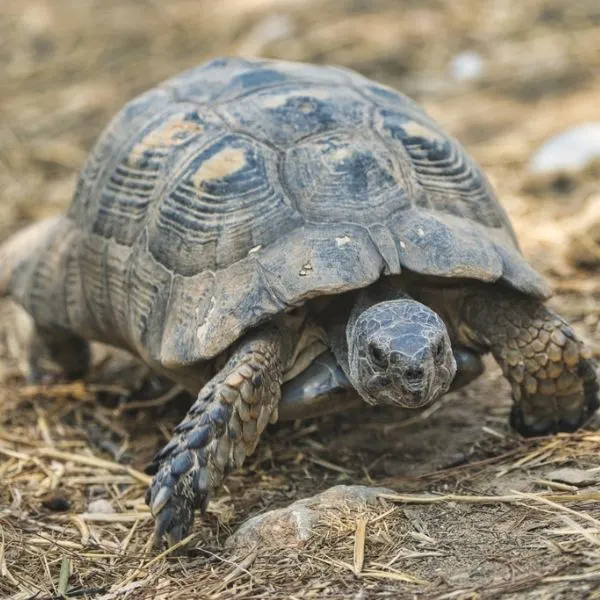
Marginated tortoises are Mediterranean tortoises. They should eat weeds, herbs, leafy plants, and flowers rather than fruit or animal protein.
Offer dandelion, plantain, sow thistle, hibiscus, mulberry leaves, endive, escarole, collards, turnip greens, mustard greens, and grass hay. Cactus pad and safe Mediterranean-style weeds are useful. Fruit should usually be avoided.
Commercial grassland tortoise food can be used as a backup or supplement, especially when soaked and mixed with safe weeds. See our marginated tortoise care guide.
What Do Egyptian Tortoises Eat?


Egyptian tortoises are small arid and semi-arid tortoises. Feed a cautious mix of fibrous weeds, grasses, flowers, and leafy greens.
Good options include plantain, dandelion, mallow, hibiscus, turnip greens, collards, endive, escarole, and watercress. Avoid making fruit, spinach, parsley, chives, rhubarb, and soft watery foods part of the normal diet.
See our Egyptian tortoise care guide before planning long-term care.
What Do African Pancake Tortoises Eat?

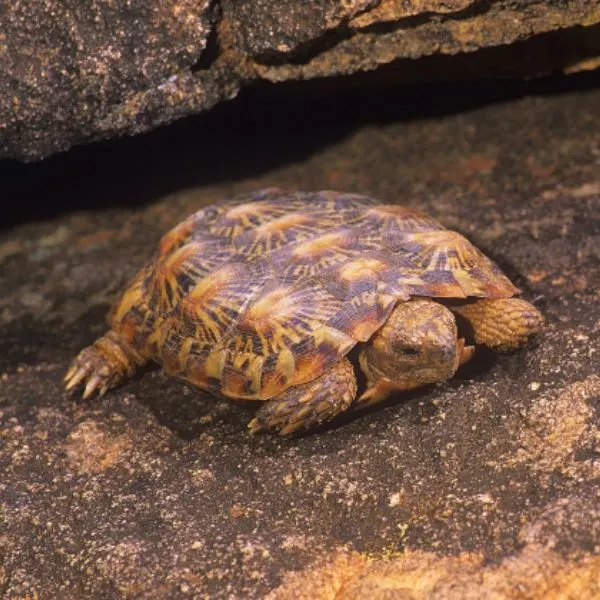
Pancake tortoises eat vegetation and dry grasses in the wild. In captivity, feed safe grasses, hay, broadleaf weeds, flowers, and leafy greens.
Good foods include plantain, dandelion, collards, turnip greens, hibiscus leaves and flowers, watercress, Bermuda grass, orchard hay, and cactus pad. Use fruit rarely or avoid it.
See our pancake tortoise care guide for setup and species details.
What Do Burmese Mountain Tortoises Eat?


Burmese mountain tortoises, also called Asian forest tortoises, are large forest tortoises. They eat leaves, grasses, weeds, fruits, fungi, seeds, and occasional animal matter in the wild.
In captivity, offer leafy greens, weeds, grasses, cactus pads, bamboo shoots, safe flowers, mushrooms, squash, carrots, sweet potato, endive, mustard greens, and other safe plant foods. Fruit can be included more often than for Mediterranean species, but it should still be controlled.
This species is not a simple substitute for a sulcata or Russian tortoise. It needs a warm, humid, forest-style setup. See our Burmese mountain tortoise care guide.
What Do Elongated Tortoises Eat?

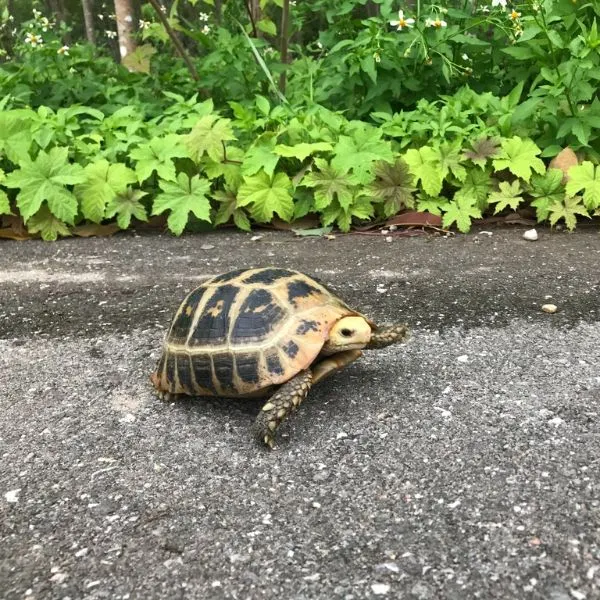
Elongated tortoises are tropical forest and forest-edge tortoises. They eat plant material, mushrooms, fallen fruit, flowers, and occasional animal matter.
Offer safe leafy greens, weeds, flowers, mushrooms, squash, carrots, cucumber, cactus pad, and limited fruit. Some keepers offer small amounts of protein, but this should be species-specific and conservative.
Because this species differs from dry grassland tortoises, confirm diet and humidity needs before adopting one. See our elongated tortoise guide.
What Do Chaco Tortoises Eat?


Chaco tortoises are South American tortoises. In the wild, they feed on cactus pads, shrubs, grasses, and some fruit.
In captivity, offer safe grasses, weeds, cactus pads, plantain, clover, dandelion, hibiscus, squash, endive, and other fibrous plant foods. Fruit can be occasional, but it should not replace roughage.
Use calcium and UVB support correctly and keep the enclosure dry or humid according to the species needs rather than guessing from the word “South American.”
What Do Red-Footed Tortoises Eat?

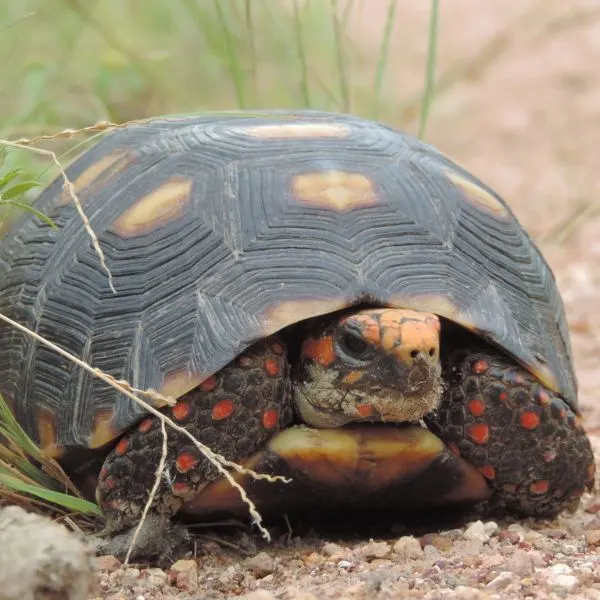
Red-footed tortoises are tropical South American tortoises. They eat a wide mix of leaves, flowers, fruit, fungi, and occasional animal matter in the wild.
In captivity, feed mostly leafy greens, weeds, safe flowers, mushrooms, vegetables, and controlled fruit. Suitable foods include dandelion, mustard greens, escarole, endive, hibiscus, grape leaves, mulberry leaves, squash, mushrooms, papaya, mango, berries, and melon.
Red-footed tortoises can receive occasional species-appropriate protein, but do not feed fatty meats or processed foods. They also need higher humidity and different setup conditions than arid tortoises. See our red-footed tortoise care guide.
What Do Greek Tortoises and Hermann’s Tortoises Eat?

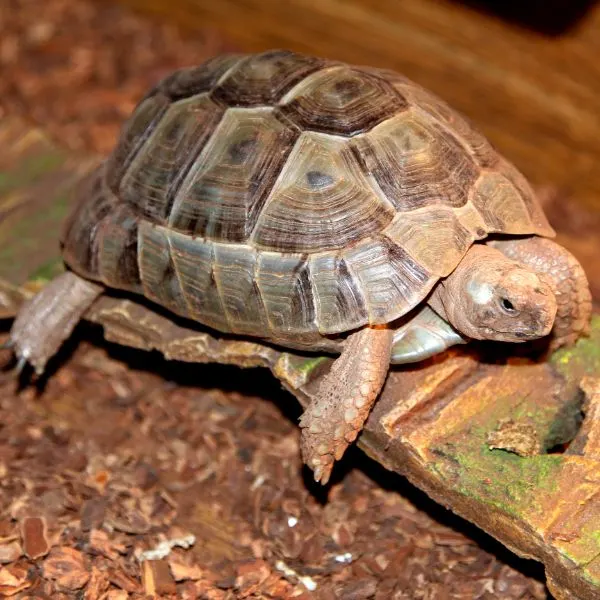
Greek and Hermann’s tortoises are Mediterranean tortoises. Their diet should be based on safe weeds, grasses, leaves, and flowers.
Good foods include dandelion, plantain, sow thistle, clover, hibiscus, mulberry leaves, grape leaves, endive, escarole, collards, turnip greens, mustard greens, mallow, and chopped hay. Avoid animal protein, cat food, dog food, and frequent fruit.
See our Greek tortoise care guide and Hermann’s tortoise care guide.
What Do Leopard Tortoises Eat?


Leopard tortoises are African grassland tortoises. In the wild, they are mostly folivores and grazers, eating grasses, forbs, succulents, and some flowers.
Feed leopard tortoises grass hay, Bermuda grass, orchard grass, broadleaf weeds, cactus pads, plantain, sow thistle, clover, dandelion, hibiscus, and other safe plants. Avoid fruit-heavy feeding and do not use animal protein.
Leopard tortoises drink more than some arid species, so provide clean water at all times. See our leopard tortoise care guide.
When to see a reptile vet
Diet problems can become health problems. Contact a reptile vet if your tortoise shows any of these signs.
- Refuses food for several days without a normal seasonal reason
- Weight loss, weakness, or severe lethargy
- Soft shell, misshapen shell, abnormal growth, or pyramiding
- Swollen eyes, closed eyes, or eye discharge
- Bubbles, mucus, wheezing, open-mouth breathing, or neck stretching to breathe
- Repeated diarrhea, no poop, gritty urates, blood, or black stool
- May have eaten gravel, plastic, toxic plants, spoiled food, dog food, cat food, or unsafe prey
- Shell wounds, foul smell, soft spots, or damaged scutes
For related health topics, see our turtle not eating guide, turtle poop guide, metabolic bone disease guide, pyramiding in tortoises guide, and turtle first aid guide.

Related AllTurtles guides
- Can Turtles Eat This? Food Finder
- What Do Turtles Eat?
- What Do Box Turtles Eat?
- Tortoise Safe Plants
- Tortoise Setup Guide
- Outdoor Tortoise Enclosure
- How to Build a Desert Tortoise Habitat
- Turtle Tank Size Calculator
- Tortoise Species Guide
- Small Tortoises Guide
Frequently Asked Questions
What do tortoises eat?
Most tortoises eat grasses, weeds, hay, leaves, flowers, and other fibrous plants. The exact diet depends on the species. Grassland and Mediterranean tortoises need high-fiber plants with little or no fruit, while red-footed and some forest tortoises can handle more fruit and occasional protein.
What are the best foods for tortoises?
Good tortoise foods include pesticide-free grasses, hay, dandelion greens and flowers, plantain weed, sow thistle, hibiscus leaves and flowers, mulberry leaves, grape leaves, cactus pads, collard greens, turnip greens, endive, and escarole.
Can tortoises eat fruit?
Some tortoises can eat small amounts of fruit, but most Mediterranean, desert, and grassland tortoises should have little or no fruit. Red-footed, yellow-footed, and some forest tortoises can eat more fruit than sulcatas, Russian tortoises, Greek tortoises, and Hermann’s tortoises.
Can tortoises eat lettuce?
Tortoises can eat some lettuce, but it should not be the main food. Romaine and darker leafy lettuces are better than iceberg lettuce. Safer staples include weeds, grasses, hay, dandelion, plantain, hibiscus, and other fibrous plants.
Can tortoises eat meat?
Most common pet tortoises should not eat meat. Red-footed and some forest tortoises may eat occasional animal matter, but processed meat, dog food, cat food, and fatty meat should be avoided. Check the species before offering animal protein.
What do baby tortoises eat?
Baby tortoises eat the same safe foods as adults, but chopped smaller and offered consistently. Feed safe grasses, weeds, leafy plants, flowers, and species-appropriate forage. Strong UVB, correct temperatures, hydration, and calcium are especially important for young tortoises.
What should tortoises not eat?
Do not feed tortoises bread, pasta, dairy, processed meat, chocolate, candy, salty snacks, avocado, toxic plant leaves, spoiled food, dog food, cat food, or wild plants from sprayed or unknown areas.
Why is my tortoise not eating?
A tortoise may stop eating because it is too cold, dehydrated, stressed, sick, newly moved, preparing for brumation, or eating the wrong diet. If appetite loss continues or comes with lethargy, swollen eyes, breathing signs, diarrhea, weight loss, or shell problems, contact a reptile vet.
Sources and further reading
- VCA Animal Hospitals, Owning a Tortoise
- VCA Animal Hospitals, Common Diseases of Tortoises
- Royal Veterinary College, Mediterranean Tortoise Care
- Royal Veterinary College, Indian Star Tortoise Care
- Royal Veterinary College, Red-Footed Tortoise Care
- Royal Veterinary College, Reptile Heating and Lighting Guide
- MSD Veterinary Manual, Clinical Procedures for Reptiles
Final thoughts
What tortoises eat depends on the species. Most grassland, desert, and Mediterranean tortoises need fibrous weeds, grasses, hay, leaves, and flowers. Forest and tropical tortoises often need a broader diet with more moisture, some fruit, fungi, and occasional species-appropriate protein.
The safest feeding plan starts with correct identification, then matches diet to the tortoise’s natural habitat, age, health, UVB, temperature, hydration, and enclosure setup. When in doubt, use the Food Finder, check the species guide, and ask a reptile vet before making risky diet changes.
Krista Futch
Monday 8th of July 2024
I was wondering what some good trees are for a larger outdoor sulcata habitat?
Vicky von Nothdurft
Wednesday 6th of September 2023
This is wonderful information but I have two tortoises that don't appear. One is tan with a tan shell and the other is red with an reddish orange shell. I live north of Houston, Texas, and, up until now, all my passing tortoises have been green and would come in for cat chow in the mornings. In fact, one of them would eat withe the raccoons for whom the feed was intended. I have pitures of both the afore-mentioned tortoises so could you help me identify them? I wondered if the tan was albino.
Thank you for any time you bend to this endeavor.